Not everyone needs a bone graft before dental implants. You may need one if the jawbone is too thin, too short, or not dense enough to hold an implant in the right position with long-term stability.
The only reliable way to know is with an exam and 3D imaging. That evaluation shows whether you have enough existing bone, whether the site should be rebuilt first, or whether another implant approach can work safely.
If your jaw lacks the volume to support an implant, bone grafting can rebuild the ridge and make implant treatment predictable. Scottsdale Center for Implant Dentistry in Scottsdale, AZ helps patients regain reliable support for long-lasting restorations and clearer treatment timelines.
A dental implant is a titanium post placed in the jaw to support a crown, bridge, or full-arch restoration. For an implant to succeed, it needs enough surrounding bone for initial stability and long-term osseointegration.
Bone often shrinks after tooth loss because the root is no longer there to stimulate the jaw. Gum disease, infection, trauma, long-term denture wear, naturally narrow anatomy, and sinus anatomy in the upper back jaw can also reduce available bone. Dental implants can help preserve bone after tooth loss; learn how implants prevent bone loss.
A graft adds material that acts as a scaffold for new bone formation. Depending on the defect and treatment plan, that material may come from donor tissue, an animal-derived source, a synthetic graft, or the patient's own bone.
The decision is based on whether an implant can be placed safely and restoratively in the available bone. It is not based only on how long the tooth has been missing.
A dentist or specialist reviews your gums, bite, remaining teeth, medical history, and the type of final restoration being planned. A CBCT scan creates a 3D view of bone height, width, density, nerves, sinuses, and nearby anatomy using 3-D cone beam imaging.
With digital treatment planning, the clinician can plan backward from the ideal tooth position rather than guessing from the bone alone. That restoration-driven approach is central to good implant treatment planning.
Common reasons grafting may be recommended include:
Many patients do not need grafting. If imaging shows enough healthy bone at the right location, the implant may be placed without rebuilding the site first.
In selected cases, an implant can also be placed right after extraction. That usually depends on the shape of the socket, control of infection, and whether the implant can achieve strong initial stability.
Shorter, narrower, or angled implants may reduce the need for grafting in some cases. These are not shortcuts, and they only work when the anatomy, bite forces, and restoration design support them.
Socket preservation is another useful strategy. Placing graft material when a tooth is removed may reduce ridge shrinkage and make later implant placement more predictable, though it does not guarantee that no future grafting will be needed.
Modern implant treatment is planned around the final restoration, then translated to surgery with digital tools. That can improve precision and help the surgeon use available bone more effectively.
Computer-guided implant surgery uses a 3D scan and a digital tooth setup to define implant position, angle, and depth. The plan may be transferred with a custom surgical guide or, in some offices, with robotic guidance that provides real-time positional feedback during robotic dental implant surgery.
These technologies can help avoid nerves, sinuses, and thin areas of bone. They may also support smaller incisions in appropriate cases, but they cannot create bone where adequate bone does not exist.
Clinical judgment still matters. Bone quality, tissue conditions, infection, and implant stability can differ from the digital plan once surgery begins.
The type of implant treatment affects how often grafting is needed. A single missing tooth usually has to be restored in one exact position, while full-arch treatment may allow implants to be placed in stronger areas of the jaw.
|
Implant Option |
Typical Use |
Possible Grafting Considerations |
|---|---|---|
|
Single implant |
Replaces one missing tooth |
May require ridge augmentation or socket grafting at that exact site |
|
Implant-supported bridge |
Replaces several adjacent teeth |
Implant positions may sometimes be selected around localized defects, but grafting can still be needed |
|
All-on-4 concept |
Supports a full arch with four strategically angled implants |
May avoid some grafts by using available front-jaw bone, but anatomy must qualify |
|
Full-arch restoration |
Replaces all teeth in one jaw using several implants |
Implant number and location can be customized; grafting needs vary by bone volume and prosthetic goals |
“All-on-4” is a specific full-arch treatment concept, not a guarantee that grafting can be avoided. Some patients need more than four implants, a different design, or preparatory grafting for a more predictable result.
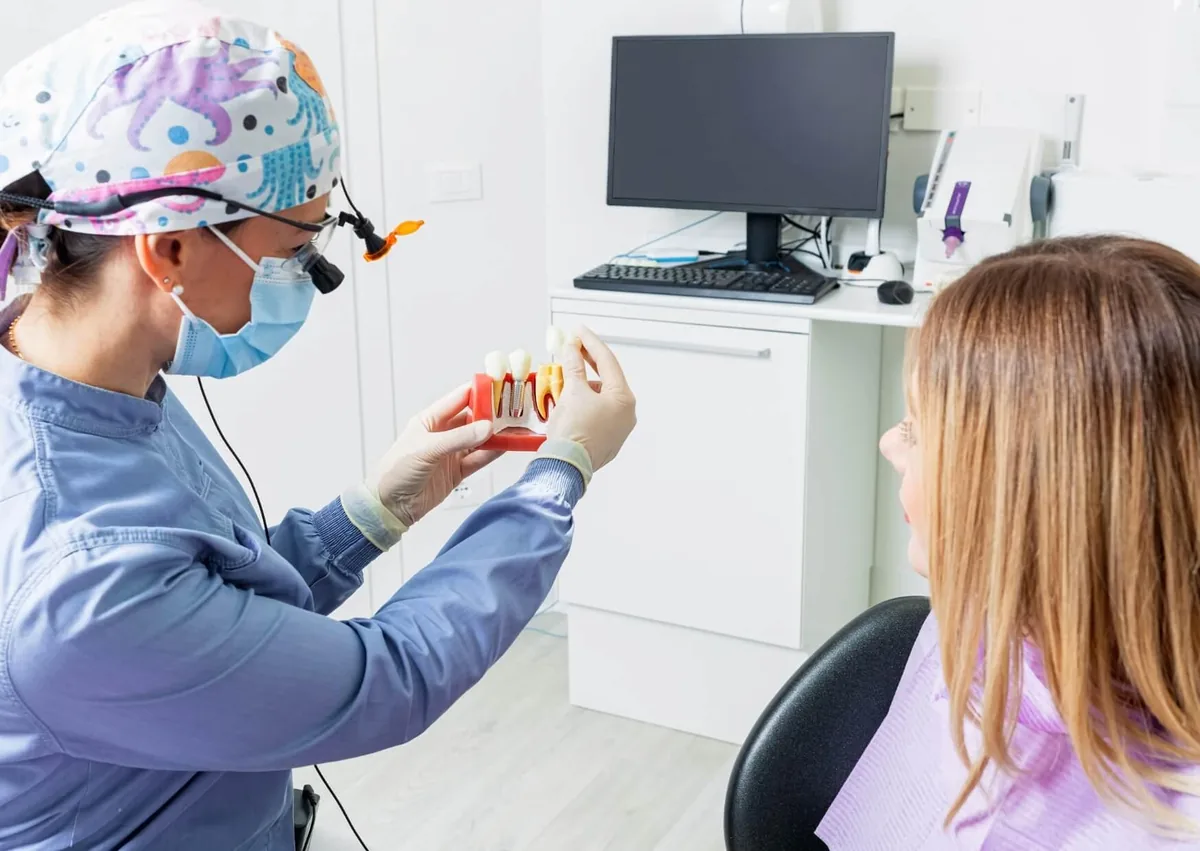
Planning may include photos, digital scans or impressions, X-rays, a CBCT scan, and a bite evaluation. The clinician also reviews health conditions and medications that may affect healing, and you can prepare for dental implants by understanding those steps in advance.
Small grafts may be done at the time of extraction or implant placement. Larger ridge augmentations and sinus lifts often require a separate procedure and a healing period before the implant is placed.
During surgery, the area is numbed and the implant is placed according to the surgical and restorative plan. Temporary teeth may be possible, but immediate loading depends on implant stability, bone quality, bite forces, and the type of restoration.
After the implant integrates with the bone, an abutment and the final crown, bridge, or full-arch prosthesis are delivered. More complex cases may involve coordination among a general dentist, periodontist, oral surgeon, and prosthodontist.
Recovery depends on the size of the graft, the location, the material used, and your overall healing response. Minor grafting often causes swelling, tenderness, bruising, and light bleeding for a few days.
A small graft may heal at the same time as the implant. A larger graft often needs several months to mature before implant placement, followed by additional healing time for osseointegration.
|
Treatment Stage |
Common Timing Range |
What Affects Timing |
|---|---|---|
|
Initial soreness and swelling |
Several days to about 1 week |
Procedure size, site, and individual healing |
|
Graft maturation |
Often 3 to 9 months |
Graft type, defect size, and bone biology |
|
Implant integration |
Often 2 to 6 months |
Jaw location, stability, health, and loading plan |
|
Final restoration |
After adequate integration |
Tissue healing, bite design, and laboratory steps |
These are general ranges, not guarantees. Your clinician may recommend a shorter or longer sequence based on the exam, the graft site, and follow-up imaging.
Long-term success depends on healthy gums, stable bite forces, and consistent maintenance. Daily brushing, interdental cleaning, and regular professional follow-up help control plaque and detect inflammation early.
Smoking and vaping nicotine can reduce blood supply and increase the risk of healing problems. Poorly controlled diabetes, untreated gum disease, teeth grinding, and missed maintenance visits can also affect outcomes.
Call your dentist promptly if you have worsening swelling, fever, pus, uncontrolled bleeding, severe or increasing pain, a persistent bad taste, exposed graft material, or a loose implant or temporary restoration. Trouble breathing or swallowing, rapidly spreading facial swelling, or swelling near the eye needs urgent medical evaluation.
Good candidates usually have manageable oral disease, enough overall health for oral surgery, and the ability to maintain the restoration. Age alone is usually less important than growth status, healing capacity, bone condition, and medical stability.
A proper implant consultation should give you a diagnosis, a restoration-driven plan, and a clear discussion of alternatives, risks, timing, and cost. Ask whether grafting is essential, helpful but optional, or avoidable with another evidence-based approach.
To confirm whether grafting is necessary and plan predictable implant treatment, request an implant and bone-grafting consultation with a clear imaging review. Scottsdale Center for Implant Dentistry focuses on bone grafting in Scottsdale, AZ and nearby North Scottsdale and Carefree; call (480) 306-8510 or book online to get started.
Yes, in selected cases. Same-day placement may be possible when the implant can achieve strong initial stability and the defect can be grafted predictably, while larger defects often require staged treatment.
Not necessarily. A properly planned and healed graft can create the support needed for a successful implant, although larger defects usually add time and complexity.
A sinus lift is a type of bone-augmentation procedure used in the upper back jaw. The sinus membrane is elevated and graft material is placed beneath it to increase bone height for implant placement, and evidence reviews report a high success rate when the procedure is appropriately planned and performed.
No. Angled implants can sometimes use available bone and avoid certain grafts, but severe bone loss, sinus anatomy, jaw shape, or prosthetic requirements may make grafting or a different full-arch design more appropriate.
Depending on your anatomy, options may include a conventional bridge, a removable partial denture, a complete denture, a different implant position, or selected short or angled implants. For a broader comparison, see choosing dental implants or bridges.
Coverage varies by plan, diagnosis, and procedure code. Some plans cover part of grafting or implant treatment, while others exclude it or apply annual limits and waiting periods.