Stained or darkened teeth can make a healthy smile look older than it is. For many patients, the goal is not an extreme change, but a cleaner, brighter shade that still looks natural.
There are several teeth whitening options, and they do not all work the same way. The best choice depends on the type of stain, the condition of the enamel, existing dental work, and how quickly you want to see results.
Whitening is usually most predictable when it is planned around the cause of discoloration. Surface stains from coffee, tea, red wine, or tobacco often respond differently than deeper color changes caused by aging, trauma, certain medications, or changes inside the tooth.
A dental exam matters more than many people expect. Whitening products can brighten natural tooth enamel, but they do not lighten crowns, veneers, fillings, or bonding, so uneven color is a common reason patients seek professional guidance first.
At Scottsdale Center for Implant Dentistry in Scottsdale, our practice provides professional teeth whitening services that may be the kind of care you are looking for.
Tooth discoloration usually falls into two broad categories: extrinsic and intrinsic staining. Extrinsic stains sit on the outer surface of the tooth, while intrinsic stains are deeper within the enamel or dentin.
Extrinsic staining is common and often linked to daily habits. Coffee, tea, dark sodas, curry, red wine, and tobacco are frequent contributors, especially when staining builds up over time.
Intrinsic discoloration can be harder to treat. It may develop from aging, prior dental trauma, enamel thinning, certain medications taken during tooth development, or changes in the nerve of a tooth after injury.
Not every dark tooth should be whitened without evaluation. A single tooth that turns gray, brown, or noticeably darker than the others may need a dental assessment because the color change can reflect internal damage rather than routine staining.
Most whitening methods use peroxide-based ingredients to break apart stain molecules. The main differences are concentration, delivery method, fit, supervision, and how well the treatment matches the patient.
In-office whitening is the fastest option for visible change. A dentist protects the gums, applies a professional whitening gel, and monitors the teeth during treatment to improve safety and reduce uneven results.
This option is often a good fit if you want a quicker result for an upcoming event or prefer treatment under direct supervision. It can also help when tooth sensitivity, gum recession, or existing dental work makes over-the-counter use less straightforward.
Some practices use light-activated technology for in-office procedures. If you are interested in that approach, ask about laser whitening.
Custom trays are made from impressions or digital scans of the teeth. Because the trays fit closely, the gel sits more evenly against the enamel and is less likely to leak onto the gums.
This is one of the most balanced professional whitening options for patients who want stronger treatment than store-bought products but prefer to whiten gradually at home. It also gives the dentist more control over the plan if sensitivity develops.
Whitening strips and prefilled trays are widely available and can work well for mild to moderate surface staining. They are more affordable, but the fit and contact with the teeth are less precise than with custom trays.
That reduced precision matters. Some areas may whiten more than others, and gum irritation is more common when the product shifts or overlaps onto soft tissue.
The ADA’s teeth whitening overview is a helpful patient resource for comparing common whitening methods and their limits.
Whitening toothpaste usually removes surface stain rather than changing the deeper color of the tooth. Many formulas rely on mild abrasives or polishing agents, so they can help maintain brightness but usually do not create the same level of change as peroxide-based whitening.
Whitening rinses tend to have a modest effect at best. Because contact time is short, they are generally better viewed as maintenance products rather than primary treatment.
When one tooth darkens after trauma or root canal treatment, external whitening may not be enough. In selected cases, a dentist may discuss internal bleaching, which is a professional technique used inside a treated tooth.
This is not a cosmetic shortcut and should not be attempted outside a dental office. A proper diagnosis is essential because not every dark tooth is a candidate for this approach.
Whitening may sound simple, but the best results usually come from careful planning. Dentists use shade assessment, digital photography, and close examination of enamel, gum health, exposed roots, and existing restorations to set realistic expectations before treatment starts.
A good plan also identifies what whitening cannot fix. If the front teeth already have visible bonding, fillings, veneers, or crowns, the natural teeth may lighten while those restorations stay the same shade.
That is where technology helps. Digital scans and high-resolution images, a core part of digital smile design, can make it easier to design custom trays, compare shade changes over time, and decide whether whitening should happen before replacing visible restorations.
One of the biggest advantages of professional care is proper treatment matching. The whitening chemistry matters, but matching the method to the tooth structure is what often prevents disappointment.
| Whitening Option | Best For | Main Advantage | Main Limitation |
| In-office professional whitening | Faster visible brightening | Closely supervised and efficient | May cost more and can still cause temporary sensitivity |
| Custom take-home trays | Gradual whitening with better fit | More even gel contact and adjustable plan | Results take longer than in-office treatment |
| Over-the-counter strips | Mild to moderate staining | Accessible and lower cost | Less precise fit and less predictable coverage |
| Whitening toothpaste | Surface stain maintenance | Easy daily use | Limited effect on deeper discoloration |
| Internal bleaching | One dark tooth after prior treatment | Targets discoloration from inside the tooth | Only appropriate in selected clinical cases |
Whitening works best on natural teeth. It does not change the color of porcelain, ceramic, composite bonding, or existing fillings. If you have a crown or are considering one, see our dental crowns article.
That distinction matters in the smile zone. If a front crown matches the teeth now, whitening the surrounding enamel may make the crown look darker afterward.
For patients whose stains will not respond to whitening alone, consider a consultation for cosmetic dentistry that can include composite or porcelain veneers.
Some stains also respond less predictably than others. Gray discoloration, banding, enamel defects, and medication-related staining may improve only partially.
In some cases, a dentist may discuss alternatives such as bonding or veneers if color mismatch remains significant. Whitening also does not treat the underlying cause of pain, cracks, cavities, or gum disease.
If discoloration comes with sensitivity, swelling, a broken tooth, or a bad taste in the mouth, the tooth should be examined before any cosmetic treatment begins.
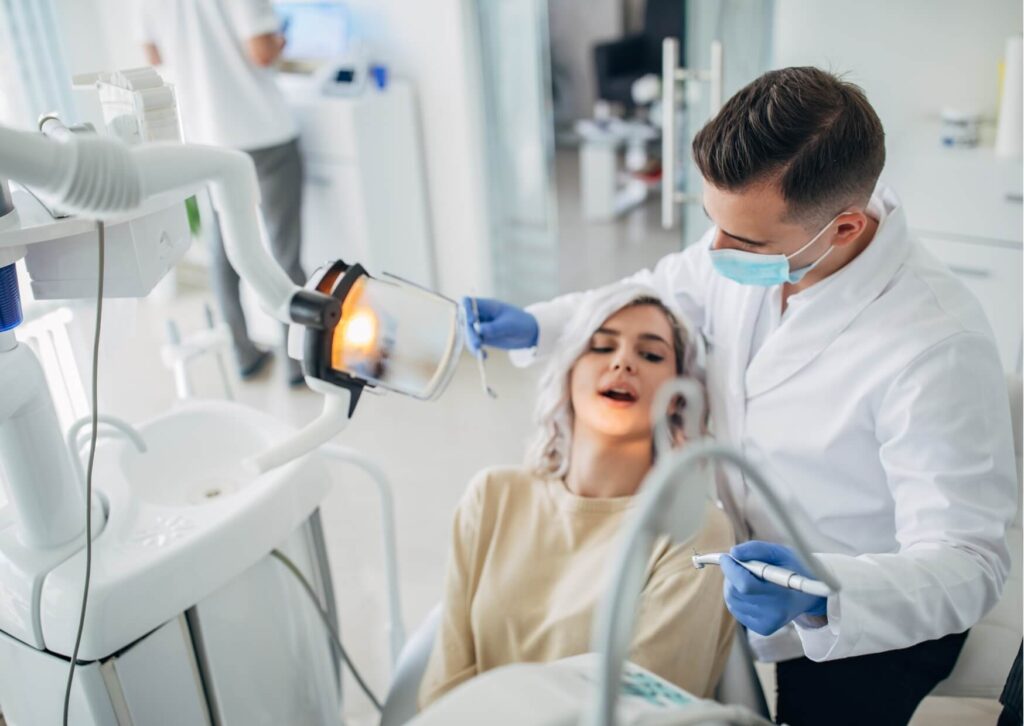
Most professional whitening starts with an exam and often a cleaning. Removing plaque and tartar first can improve contact between the whitening material and the enamel, and it helps the dentist see the true starting shade.
During planning, the dentist checks for cavities, leaking fillings, gum recession, enamel wear, and cracked teeth. These issues do not always rule out whitening, but they may change the timing or the safest method.
If in-office whitening is chosen, the gums and lips are protected before the gel is applied. The dentist then monitors the teeth closely and stops or adjusts treatment if irritation or significant sensitivity appears.
If custom trays are used, the office provides a structured plan and follow-up guidance. That matters because whitening is not just about starting treatment, but also about knowing when to pause, when to reassess, and when the shade has reached a reasonable endpoint.
The most common short-term side effect is temporary tooth sensitivity. Teeth may feel more reactive to cold air, cold drinks, or sweets for a short period after treatment.
Mild gum irritation can also happen, especially if whitening gel contacts the soft tissue. This usually settles, but ongoing burning, whitening of the gums, or painful irritation should be discussed with a dentist.
Whitening should not feel like severe pain. If a tooth develops sharp lingering pain, swelling, a pimple on the gum, or sudden darkening, that is not a routine whitening reaction and needs prompt evaluation.
Overuse is another concern. Repeated unsupervised whitening can increase sensitivity and may make enamel surfaces feel rougher or leave the color looking unnaturally flat, especially when patients keep treating teeth that have already reached their practical limit.
Good candidates usually have healthy gums, no untreated cavities, and natural teeth with yellow or surface-based staining. Patients who want a modest but noticeable improvement often do very well with either in-office treatment or custom trays.
Whitening may be less predictable when there are many visible restorations, significant enamel loss, deep gray discoloration, or one tooth that is much darker than the rest. In these situations, a dentist may recommend a more tailored cosmetic plan rather than standard whitening alone.
Age also matters in a practical sense. Younger patients may have larger pulp chambers, meaning the center of the tooth is closer to the surface, which can make sensitivity more likely.
Older teeth often show darkening from enamel wear and dentin exposure. Pregnancy, active mouth irritation, and untreated dental disease are common reasons to postpone treatment until the mouth is healthier.
A dental evaluation helps separate a cosmetic concern from a problem that needs care first.
Whitening is not permanent. Teeth continue to pick up stains over time, especially with frequent coffee, tea, red wine, tobacco, or strongly pigmented foods.
Maintenance usually works better than repeated aggressive whitening. Regular cleanings, lower-stain habits, and occasional touch-up treatment guided by a dentist are often enough to keep the color stable.
Using a straw for dark beverages, rinsing with water afterward, and avoiding tobacco can help reduce new staining. These habits will not stop all color change, but they can slow it down in a meaningful way.
If the goal is a brighter smile that still looks believable, restraint matters. The best whitening result is usually one that looks healthy and natural in daylight, not one that pushes the teeth to an opaque artificial shade.
A dental visit is a smart first step if the teeth are darkening unevenly, if one tooth has changed color, or if whitening products have caused significant sensitivity in the past. It is also worth booking an exam when there are crowns, veneers, or fillings on the front teeth and color matching matters.
Professional guidance becomes more important when the cause of discoloration is unclear. What looks like staining may actually involve enamel damage, internal tooth changes, or old restorations that need to be replaced rather than whitened.
For patients comparing teeth whitening options, the most useful question is not which product is strongest. It is which approach fits the biology of the teeth, the timeline, and the cosmetic goal without creating avoidable problems later.
If you would like professional teeth whitening in Scottsdale or nearby Phoenix and Tempe, Scottsdale Center for Implant Dentistry can help. Call us at (480) 306-8510 to schedule an appointment.
In-office professional whitening usually produces the fastest visible change. It is done under supervision, which also helps manage gum protection and sensitivity.
They can help with mild to moderate staining, but they are usually less precise. Custom trays tend to give more even coverage because they fit the teeth more closely.
When whitening is used appropriately, it is generally considered safe. Problems are more likely with overuse, poor fit, untreated dental disease, or trying to whiten without first checking for cracks, cavities, or gum recession.
A single dark tooth may have a different cause than general staining, including prior trauma or internal changes in the tooth. That pattern should be evaluated by a dentist before cosmetic whitening is started.
No. Whitening changes natural tooth structure but does not lighten crowns, veneers, fillings, or bonding.
Results vary with diet, tobacco exposure, oral hygiene, and the starting shade of the teeth. Many patients keep results longer with routine cleanings and occasional professionally guided touch-ups.