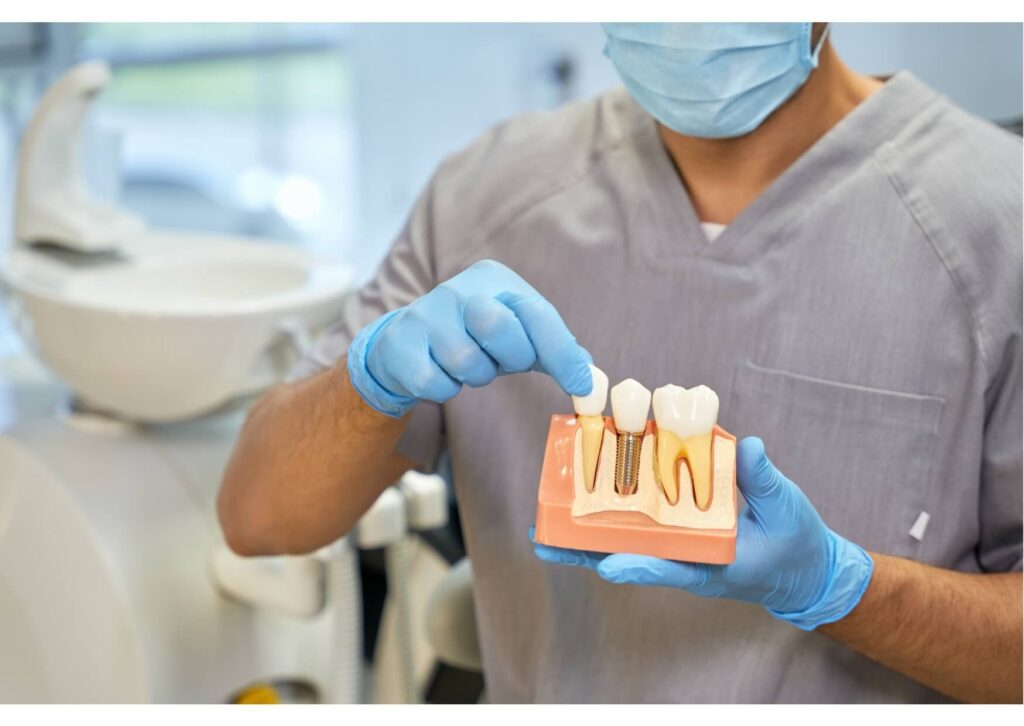
Losing a tooth changes more than appearance. It can affect chewing, speech, bite stability, and, over time, even the shape of the jaw because the bone in that area no longer receives normal stimulation.
That is why many patients searching for dental implants pros and cons are not just comparing prices. They are trying to understand whether dental implants are the most durable and biologically sound way to replace a missing tooth, several teeth, or a full arch.
Dental implants are small titanium or ceramic posts placed in the jawbone to support a crown, bridge, or full-arch prosthesis. In many cases, they feel more like natural teeth than removable options do. Still, they are not the right answer for every situation, and the decision should be based on bone support, gum health, medical history, bite forces, and long-term maintenance.
At Scottsdale Center for Implant Dentistry, patients can explore their options through personalized implant evaluations and advanced treatment planning. Our team works with individuals throughout Scottsdale and nearby areas to help determine whether dental implants are the right fit for their oral health needs.
The biggest advantage of implants is that they replace both the visible tooth and the root function beneath the gums. That matters because the root helps transmit chewing forces into the jawbone, which may reduce the bone shrinkage that often follows tooth loss.
For many patients, implant-supported teeth feel more stable than removable dentures. There is no need for denture adhesive, no shifting during meals, and less worry about a restoration moving while speaking. A single implant also usually avoids cutting down neighboring teeth, which is often necessary with a traditional bridge. For a closer comparison, see implants or bridges.
Implants can also improve function in ways that are easy to underestimate until a tooth has been missing for a while. Chewing efficiency may improve, food choices often expand, and some patients notice greater confidence in social settings because the replacement feels fixed rather than temporary.
The disadvantages are real, and they should be weighed carefully. Implants require a surgical procedure, healing time, and a planning process that is more involved than getting a removable appliance or, in some cases, a bridge.
Cost is another major factor. While implants often last longer than other options, the upfront investment is usually higher because treatment may include imaging, surgical placement, healing visits, and the final restoration.
Not every patient has enough bone or healthy gum tissue for immediate placement. Some cases need bone grafting, sinus augmentation, or gum treatment first. Smoking, uncontrolled diabetes, severe teeth grinding, and active periodontal disease, which is gum disease affecting the supporting tissues around teeth, can increase the risk of complications.
There is also no guarantee of lifelong success. Implants can fail if the bone does not integrate properly or if inflammation develops around them later. That inflammation is called peri-implantitis, a condition similar in some ways to gum disease around natural teeth. Learn more about gum disease and implants.
For many readers, a side-by-side comparison is the clearest way to evaluate the tradeoffs.
| Potential Pros | Potential Cons |
| Replaces missing teeth without relying on adjacent teeth | Higher upfront cost than many alternatives |
| May help preserve jawbone where the tooth root was lost | Requires surgery and healing time |
| Often feels and functions more like a natural tooth | Some patients need bone grafting or other preparatory treatment |
| Can support single teeth, bridges, or full-arch restorations | Not ideal for every medical or dental situation |
| Fixed options are usually more stable than removable dentures | Ongoing hygiene and maintenance are essential |
| Long-term success rates are strong in well-selected cases | Complications such as loosening, infection, or implant failure can occur |
The most important point is that implants are neither a miracle solution nor an excessive treatment by default. They are often an excellent option when the anatomy, bite, and home care habits support long-term success.
Implants are not one single treatment. The right design depends on how many teeth are missing, where the gap is located, the quality of the bone, and whether the goal is to replace one tooth or rebuild a full arch.
A single implant is commonly used when one tooth is missing and the neighboring teeth are healthy. In that situation, an implant can be a conservative choice because it usually avoids preparing the teeth on either side for a bridge. For more on patient options, see single tooth replacement.
When several teeth in a row are missing, a bridge supported by implants may replace that span without placing an implant for every missing tooth. This can be efficient when bone and bite conditions allow it.
For patients missing most or all teeth in the upper or lower jaw, All-on-4 implants or full-arch implant treatment may provide a fixed alternative to a conventional denture. These systems use a limited number of implants to support a full set of replacement teeth.
This approach can be life-changing for the right patient, especially when dentures feel loose or uncomfortable. Still, it is a major restorative plan, not a shortcut. The design, bite balance, speech considerations, and cleaning access all matter.
Modern implant dentistry is much more data-driven than it was years ago. Three-dimensional cone beam CT imaging allows the dental team to evaluate bone volume, bone density, nearby nerves, sinus anatomy, and the ideal angulation for placement before surgery begins.
Digital planning software can merge scans of the jaw with scans of the teeth, which helps position implants based on the final restoration rather than relying on guesswork during surgery. In many practices, this leads to guided surgery, where a custom surgical guide helps transfer the treatment plan accurately to the mouth.
Some centers also use robotic-assisted implant systems. These systems do not replace clinical judgment, but they can improve precision and provide real-time guidance in selected cases. In practical terms, robotic implants may support more precise placement, especially in complex anatomy or full-arch treatment.
Technology does not make every case simple, and it does not eliminate risk. What it often does is reduce avoidable variability and support better planning.
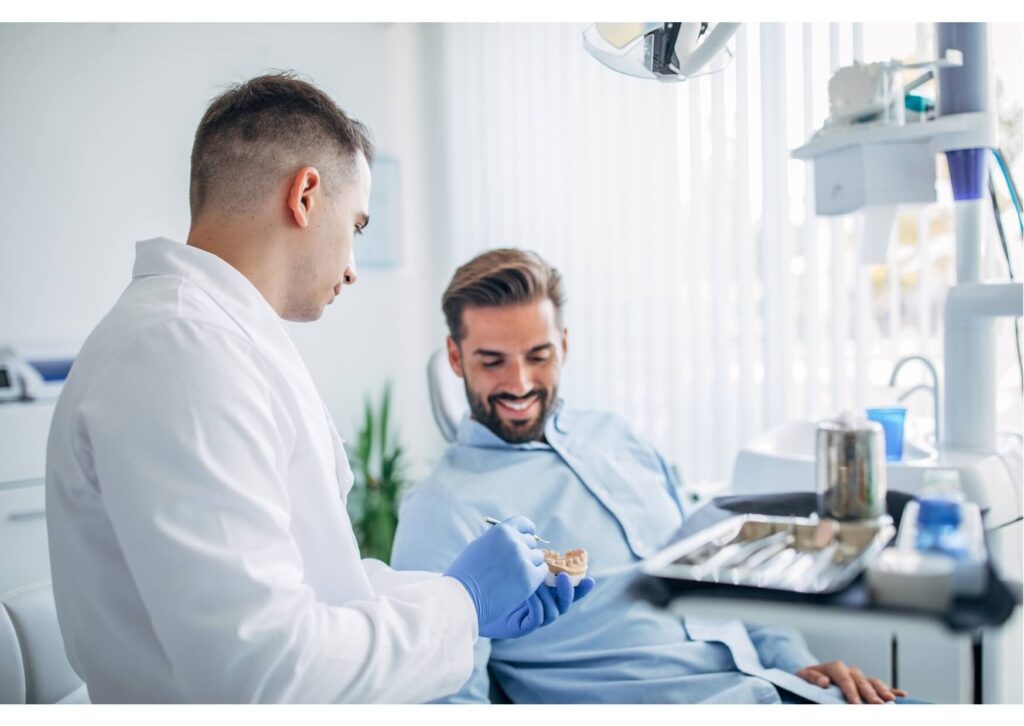
Implant treatment usually starts with an examination, dental imaging, and a discussion of goals. The dental team will assess the missing-tooth area, gum condition, bite pattern, and whether any infection, bone loss, or cracked teeth nearby need attention first.
If the site is ready, the implant may be placed at the time of extraction or after a healing period, depending on infection, bone support, and cosmetic demands. In other cases, grafting is done first to rebuild the foundation.
During surgery, the implant is placed into the jawbone under local anesthesia, sometimes with additional sedation depending on the case and the practice setting. After placement, the bone gradually bonds to the implant surface through osseointegration, which means direct biological attachment between bone and implant.
Once healing is adequate, the restorative phase begins. That may involve a connector piece called an abutment and then the final crown, bridge, or full-arch prosthesis. The visible tooth portion is designed for bite balance, appearance, and cleansability, not just shape alone.
Most patients describe the early recovery as manageable rather than severe, though the experience varies with the number of implants, whether extractions were done at the same visit, and whether grafting was needed. Mild to moderate soreness, swelling, and temporary chewing limitations are common in the first several days.
The larger timeline is what often surprises people. The gum tissue may look improved fairly quickly, but deeper bone healing takes longer. Depending on the case, the final restoration may be delivered within weeks or after several months.
Immediate teeth are sometimes possible, especially in full-arch cases, but immediate does not mean fully healed. A temporary fixed restoration may be used while the implants integrate, and patients still need to follow the dentist's guidance about force and diet during that period.
Contact the treating dentist promptly if there is worsening swelling, fever, pus, uncontrolled bleeding, severe pain, or a restoration that suddenly feels loose. Those findings do not always mean a serious problem, but they do deserve timely evaluation.
Well-placed implants can perform very well for many years, and published success rates are strong in appropriate cases, but long-term success is not automatic. The surrounding tissues still need to stay healthy, and the restoration still has to tolerate daily chewing forces.
Home care matters. Plaque can accumulate around implants just as it does around natural teeth, and inflammation can develop if cleaning is inconsistent. Regular professional maintenance is also important because implant restorations have contours and attachment points that need periodic evaluation.
Bite forces deserve special attention. Patients who clench or grind may place heavy stress on implants and restorations, especially at night. In some cases, the dentist may recommend a protective appliance to reduce mechanical overload.
Smoking cessation, diabetes control, and treatment of active gum disease can make a meaningful difference. The best implant cases are not just surgically successful. They are maintainable, stable, and realistic for the patient's habits over time.
A good implant candidate often has healthy gums, adequate bone volume, and a commitment to follow-up care. Missing teeth alone do not determine candidacy. The quality of the surrounding tissues, the bite, and overall health all contribute.
Patients may still qualify even if bone loss has already occurred, but additional procedures may be needed. On the other hand, if oral hygiene is very limited, gum disease is active, or medical conditions are poorly controlled, it may be safer to stabilize those issues first.
There are also situations where another option may make more sense. A conventional bridge, partial denture, or full denture may be more appropriate when surgery is not desirable, when cost is a major barrier, or when anatomy limits predictable implant placement.
The most useful next step is a diagnostic consultation rather than assuming implants are either perfect or impossible. A well-planned exam can clarify what is feasible, what is optional, and what tradeoffs come with each path. If your case is complex, it's often helpful to consult a prosthodontist.
Understanding the dental implants pros and cons is only the beginning. The right treatment depends on your bone support, gum health, bite alignment, and long-term goals. At Scottsdale Center for Implant Dentistry, patients receive detailed implant evaluations and advanced treatment planning designed to support lasting comfort, function, and stability.
If you are considering dental implants in Scottsdale, call us at (480) 306-8510 to schedule a consultation. We proudly help patients across Phoenix, Tempe, and nearby communities explore personalized implant solutions with experienced, patient-focused care.
They can be worth it when long-term stability, chewing function, and bone support are priorities. The value depends on anatomy, oral health, budget, and whether a fixed solution is truly the best fit.
For many patients, the biggest drawback is the combination of cost, surgery, and treatment time. In some cases, the need for grafting or management of gum disease adds complexity.
Placement is typically done with local anesthesia, so sharp pain during the procedure is usually controlled. Some soreness and swelling afterward are common, but severe or worsening pain should be evaluated.
Many implants last for years or decades when the case is well planned and maintained. Longevity depends on bone support, gum health, bite forces, smoking status, and cleaning habits.
No. Many patients are candidates, but not everyone is. Bone loss, active periodontal disease, uncontrolled medical conditions, and heavy grinding may affect whether implants are advisable or whether preparatory treatment is needed first.