The full mouth dental implants cost in the United States often ranges from about $40,000 to $90,000 or more for both arches. The total depends on the type of restoration, number of implants, materials, extractions, grafting, sedation, technology, location, and clinician experience. For a broader comparison, see cost of dental implants.
A personalized estimate requires an exam and 3D imaging. Advertised prices may cover only surgery or only a temporary prosthesis, so ask for a written estimate that lists each phase, material, and possible added procedure, including fee inclusions.
If you’re weighing options to replace most or all teeth and want durable, stable function instead of unstable dentures, full mouth dental implants may be the best long-term solution. Scottsdale Center for Implant Dentistry in Scottsdale, AZ offers personalized evaluations and clear information about treatment steps, materials, and realistic cost ranges to help you compare choices.
Full-mouth implant treatment replaces all or nearly all teeth in the upper jaw, lower jaw, or both. It is often considered when a person has extensive tooth loss, severely damaged teeth, advanced periodontal disease, or dentures that still feel loose after adjustment.
Unlike a conventional denture, an implant restoration attaches to titanium or ceramic posts placed in the jawbone. These implants act like artificial tooth roots, improving stability and helping preserve remaining bone.
The final restoration may be removable by the patient or fixed so only a dental professional removes it. Fixed teeth often feel more natural and secure, but they still require daily cleaning underneath.
These broad U.S. ranges are educational estimates, not quotes. Fees vary by region and case complexity, and treatment for both arches is usually about double the cost of one arch.
|
Treatment Option |
Typical Use |
Approximate U.S. Cost |
|---|---|---|
|
Single implant with crown |
Replaces one tooth |
$3,000 to $7,000 per tooth |
|
Usually supported by 2 to 6 implants per arch |
$8,000 to $25,000 per arch |
|
|
Fixed full-arch restoration, including All-on-4-type treatment |
Usually 4 to 6 or more implants support one fixed arch |
$20,000 to $45,000 or more per arch |
|
Fixed restoration for both arches |
Replaces upper and lower teeth |
$40,000 to $90,000 or more total |
Replacing every missing tooth with a separate implant is uncommon and usually unnecessary. In most full-arch cases, four to six or more implants support one prosthesis, depending on bone anatomy, bite forces, restoration design, and risk factors.
All-on-4 implants describe a concept in which four implants support a full arch, often with the back implants angled to use available bone. Four implants are not right for every patient, and some cases benefit from additional implants for support or backup if one implant fails.
A complete estimate may include the consultation, records, cone-beam CT scan, digital impressions, surgical guide, extractions, implants, abutments, sedation, temporary teeth, and final prosthesis. Bone grafting, sinus augmentation, infection management, or gum disease treatment can add to the total.
Material choice also affects price. Acrylic or reinforced composite teeth often cost less upfront, while zirconia restorations usually cost more and may offer greater wear resistance in the right case.
Ask whether the quoted fee includes:
Dental insurance may help with exams, extractions, or part of the prosthesis, but many plans have exclusions and low annual maximums. Medical insurance sometimes applies when tooth loss or reconstruction relates to a covered injury or medical condition, but coverage should be confirmed in writing before treatment.
Modern implant planning often combines a cone-beam CT scan with a digital model of the teeth and gums. This lets the clinician plan implant position, angle, and depth in relation to bone volume, nerves, sinuses, and the final tooth design.
A static surgical guide transfers that plan to the mouth through precisely positioned channels. Dynamic navigation and robotic guidance can also track instruments in real time, while the clinician remains responsible for all treatment decisions.
Some practices use Yomi robotic implants in selected cases to support highly precise placement. You can read more about robotic dental implant surgery.
These systems may improve placement accuracy and support smaller incisions in some patients, but they do not remove surgical risk or guarantee success. Published evidence on guided accuracy also shows that some deviation is still possible.
The main treatment choice is usually between a removable implant-supported denture and a fixed full-arch restoration. A removable option often has a lower upfront cost, while a fixed option usually offers stronger bite stability and a more natural feel.
Single implants are best when only a few teeth need replacement. When most or all teeth are missing, full-arch solutions are usually more efficient and more practical than placing an implant for every tooth.
The right design depends on bone quality, smile line, bite force, hygiene ability, esthetic goals, and budget. A detailed exam is needed to decide whether a patient is better suited for an All-on-4-style plan, a larger implant-supported bridge, or an implant denture.
Planning starts with a medical and dental history, exam, bite analysis, photos, and 3D imaging. The team also evaluates gum health, bone support, appearance goals, speech, cleaning access, anesthesia options, and alternatives such as dentures or saving treatable teeth. For more on this phase, see implant treatment planning.
During surgery, teeth that cannot be saved may be removed, implants are placed, and grafting may be completed if needed. Some patients receive temporary teeth the same day, but same-day teeth are provisional and do not mean healing is complete.
Osseointegration usually takes about three to six months, though it may take longer after grafting or in higher-risk cases. After healing, the team confirms implant stability and completes the final restoration with refined bite, fit, and appearance.
|
Stage |
Common Timing |
What to Expect |
|---|---|---|
|
Evaluation and planning |
One or more visits |
Examination, 3D imaging, records, and cost estimate |
|
Surgery and temporary teeth |
One day or staged visits |
Extractions, implant placement, and possibly a provisional prosthesis |
|
Initial healing |
First 1 to 2 weeks |
Swelling, tenderness, diet restrictions, and follow-up |
|
Bone integration |
About 3 to 6 months |
Gradual healing with restricted loading as directed |
|
Final restoration |
After integration |
Final impressions or scans, try-ins, and delivery |
Swelling, bruising, mild bleeding, and soreness are common during the first several days. Many people return to non-strenuous activity within a few days, but recovery depends on the extent of surgery, grafting, general health, and job demands.
Most patients need a soft diet and must avoid heavy force on temporary teeth while the implants integrate. The surgical team should give personalized instructions for cleaning, activity, diet, and pain control based on the patient's health and medications.
Call the treating clinician promptly for worsening swelling after several days, persistent bleeding, fever, pus, a bad taste with increasing pain, an unstable temporary restoration, or new numbness. Trouble breathing or swallowing, rapidly spreading swelling, or uncontrolled bleeding requires urgent emergency care.
Implant restorations can function for many years, but implants are not maintenance-free. Plaque can inflame the tissues around an implant, and progressive infection with bone loss is called peri-implantitis. Learn more about risks in can dental implants fail.
Daily brushing and cleaning under the restoration are essential. Professional maintenance is often scheduled every three to six months, and some fixed prostheses need periodic removal for detailed inspection and cleaning.
Smoking or nicotine use, poorly controlled diabetes, untreated gum disease, inconsistent hygiene, teeth grinding, and high bite forces can increase complication risk. Nightguards, repairs, replacement teeth, screws, maintenance visits, and eventual prosthesis replacement can add to lifetime cost.
Good candidates often include adults with widespread missing or non-restorable teeth who have enough bone for implants or are eligible for grafting. They also need to be healthy enough for oral surgery and able to maintain the restoration long term. See full mouth reconstruction candidacy for related details.
A clinician should carefully review active gum disease, uncontrolled medical conditions, medications that affect bone healing, prior head or neck radiation, major bone loss, heavy nicotine use, and severe grinding. These factors do not always rule out treatment, but they may change the plan, timing, number of implants, or expected risk.
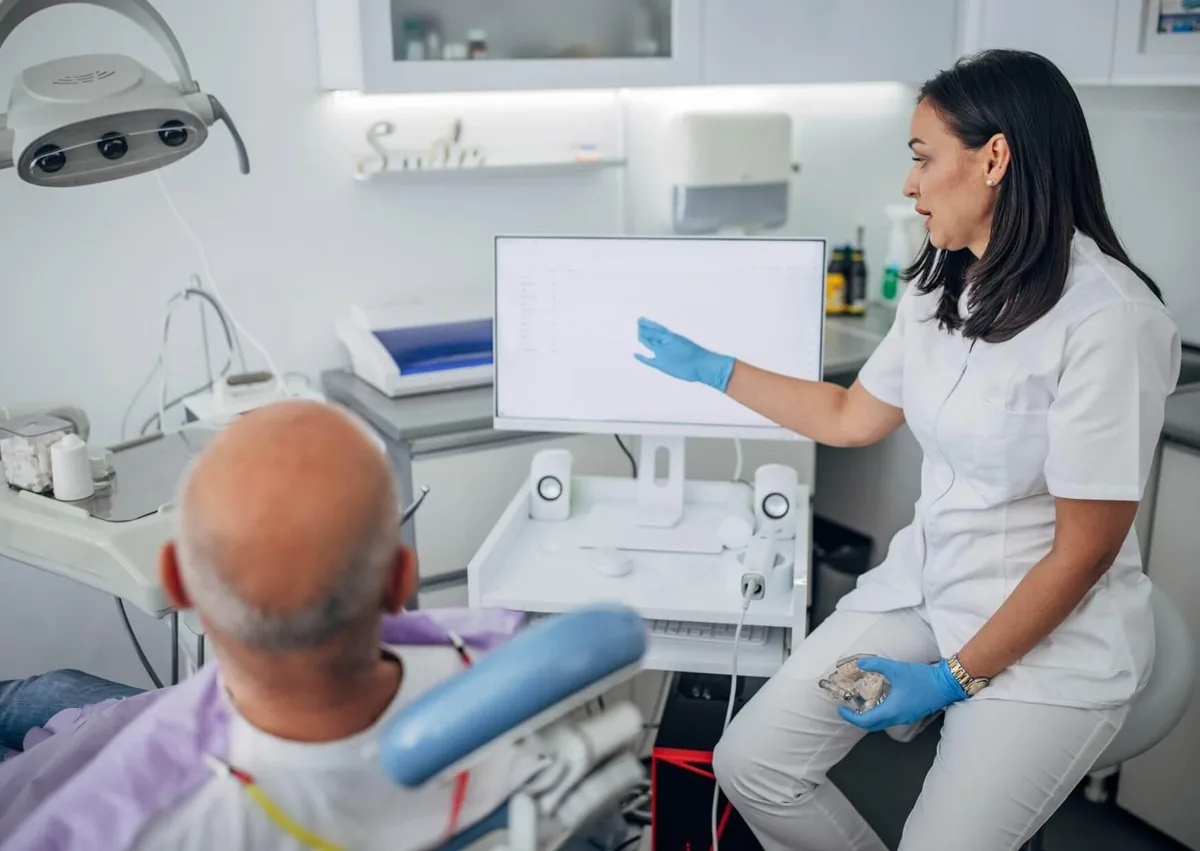
Before moving forward, ask for a comprehensive exam and an itemized treatment plan that separates required care from optional upgrades. That makes it easier to compare fixed full-arch teeth, a removable implant denture, conventional dentures, or preserving selected teeth when possible.
To get an accurate, individualized estimate and timeline, arrange an in-office evaluation with a restorative team experienced in full mouth dental implants. Contact Scottsdale Center for Implant Dentistry in Scottsdale, AZ, serving North Scottsdale and Carefree, or call (480) 306-8510 to schedule an appointment.
Treatment for both arches often costs about $40,000 to $90,000 or more in the United States. Complex grafting, premium materials, additional implants, sedation, and regional fees can raise the total.
A low advertised figure may apply to one arch, surgery only, a temporary prosthesis, or the least complex qualifying case. Confirm whether imaging, extractions, grafts, abutments, sedation, final teeth, and follow-up care are included.
Implants and temporary teeth can sometimes be placed on the same day. Final teeth usually come later because the implants need time to integrate with bone and the tissues and bite need to stabilize.
They often are because one prosthesis is supported by a limited number of implants rather than an implant for every missing tooth. Suitability depends on anatomy, bone quality, bite forces, health risks, and the desired restoration.
Implants can remain functional for decades in favorable conditions, but longevity cannot be guaranteed. The attached restoration may need repair or replacement sooner because of wear, fracture, bite changes, or material limits.
Many dental offices offer phased treatment or third-party financing, and some patients use health savings or flexible spending accounts when eligible. Compare interest, fees, repayment terms, and refund policies, and verify insurance benefits before signing a financing agreement.