For one missing tooth, dental implants often preserve more healthy tooth structure and may offer the best long-term function, while a dental bridge can restore the space faster without implant surgery. The better choice depends on the condition of the neighboring teeth, bone volume, oral health, treatment time, cost, and personal preferences.
Both options can restore chewing and appearance, but they work in different ways. For a broader overview, see options for missing teeth. A bridge is supported by nearby teeth, while an implant is anchored in the jawbone and supports its own crown.
If you're weighing the long-term benefits of a single-tooth replacement versus a bridge, learning about dental implants can clarify whether an implant will better preserve bone and nearby teeth. Scottsdale Center for Implant Dentistry in Scottsdale, AZ can explain implant options and how they may affect function and appearance.
A traditional bridge usually includes an artificial tooth, called a pontic, attached to crowns placed over the teeth on either side of the gap. Those supporting teeth must be reshaped, even if they are otherwise healthy. For more on restoration options, see crowns and bridges.
A dental implant is a titanium or ceramic post placed in the jawbone. After the implant integrates with the bone, it is typically restored with an abutment and crown.
|
Factor |
Traditional Dental Bridge |
Dental Implant |
|---|---|---|
|
Support |
Neighboring teeth |
Jawbone |
|
Surgery |
Usually not required |
Required |
|
Effect on nearby teeth |
Teeth are reshaped for crowns |
Usually leaves nearby teeth untouched |
|
Typical treatment time |
Often a few weeks |
Commonly several months |
|
Cleaning |
Floss threader or bridge-specific tools |
Brushed and flossed much like a natural tooth |
|
Bone preservation |
Does not stimulate bone beneath the missing tooth |
May help preserve bone around the implant |
|
Common concerns |
Decay or fracture of supporting teeth |
Infection, poor integration, or mechanical complications |
Neither option is guaranteed to last for life. A bridge may need replacement because of decay, fracture, cement failure, or changes in the supporting teeth, while an implant can develop gum and bone inflammation or problems with its crown or components.
A bridge may be the better choice when the teeth beside the space already need crowns because of large fillings, fractures, or heavy wear. It may also make sense when implant surgery is not advisable, bone grafting would be extensive, or a patient wants a shorter treatment process.
Bridge treatment usually avoids the healing period required for an implant to bond with bone. However, the health and shape of the supporting teeth matter because they must carry the forces placed on the replacement tooth.
A resin-bonded bridge, often called a Maryland bridge, uses wings bonded to the backs of neighboring teeth and requires less tooth reduction. It is most often used for selected front-tooth spaces because it may not tolerate heavy biting forces as well as a conventional bridge.
An implant may be preferred when the neighboring teeth are healthy and there is enough bone for stable placement. It replaces a tooth independently, which can help preserve intact teeth and make cleaning easier.
Implants can also reduce the bone loss that commonly follows tooth removal by transferring chewing forces into the jaw. They do not stop all bone changes, and healthy gums and good home care still matter.
Certain conditions can raise the risk of complications, including uncontrolled diabetes, active gum disease, heavy smoking or nicotine use, severe teeth grinding, and inadequate bone. These factors do not automatically rule out treatment, but they do require careful evaluation and risk management.
Implant planning may combine a three-dimensional cone beam CT scan with a digital scan of the teeth and gums. This helps the dentist or specialist evaluate bone dimensions, nearby roots, the sinus, and nerve pathways while planning the implant around the future crown.
A computer-generated surgical guide can help transfer that plan to the mouth. Some offices also use dynamic navigation or robotic assistance to provide real-time guidance during placement, but the clinician still makes the diagnosis, develops the plan, and performs or controls the procedure.
These technologies may improve positioning precision in appropriate cases, especially when anatomy or restorative space is limited. For more on modern planning tools, see digital treatment planning. Technology supports clinical judgment rather than replacing it.
A single implant and crown can replace one missing tooth without relying on adjacent teeth. If several nonconsecutive teeth are missing, each space may be evaluated separately.
An implant-supported bridge can replace multiple adjacent teeth using fewer implants than the number of missing teeth. Unlike a traditional bridge, its support comes from implants rather than natural teeth.
All-on-4 is one approach that uses four strategically positioned implants to support a full-arch fixed restoration. Some patients need more than four implants, different angulation, bone grafting, or another design based on bone quality, bite forces, anatomy, and prosthetic goals.
A temporary fixed restoration can sometimes be placed on the day of surgery, often called immediate loading. This depends on strong initial implant stability and does not mean healing is complete, so diet limits and follow-up instructions still matter.
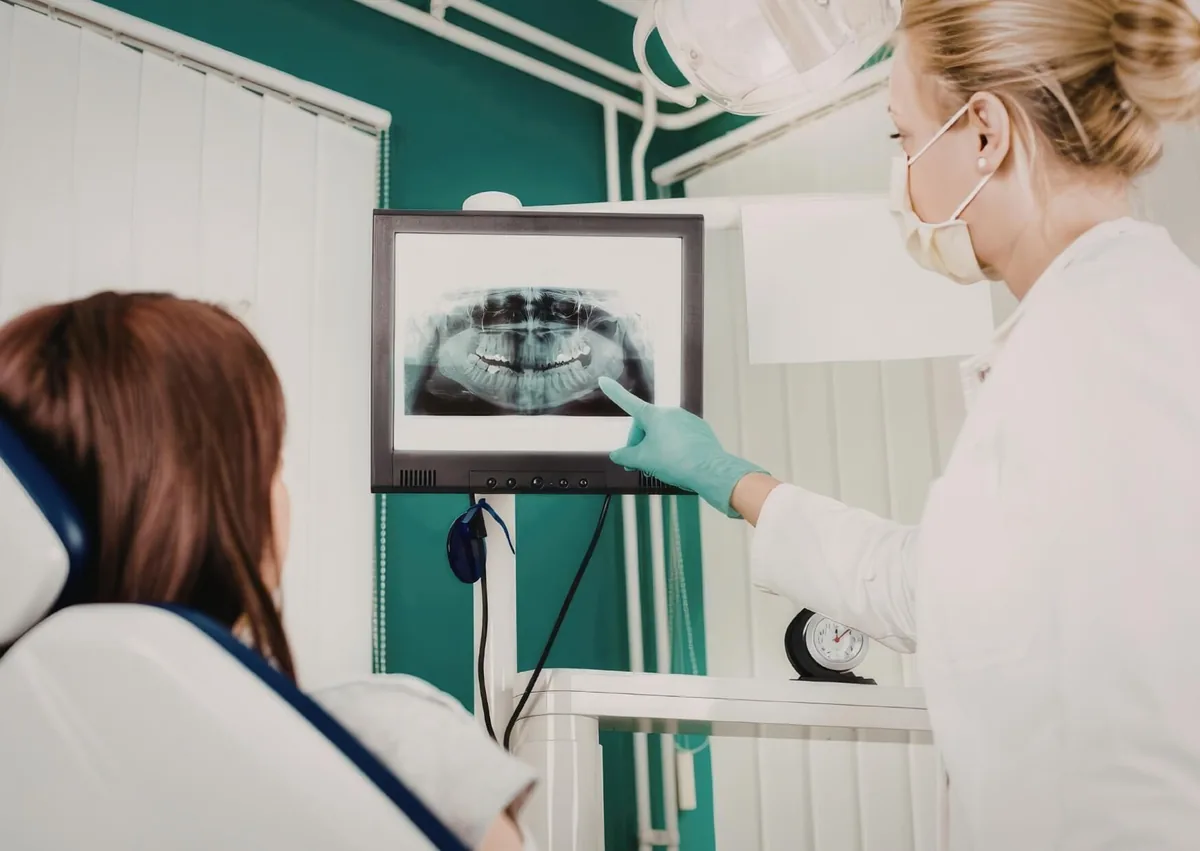
Planning starts with an exam, dental imaging, gum assessment, bite evaluation, and review of health conditions and medications. The dentist also evaluates whether a damaged tooth can predictably be saved before recommending extraction and replacement.
For a bridge, the supporting teeth are prepared and scanned or impressed, and a temporary bridge may be worn while the final restoration is made. The final bridge is then fitted, adjusted, and bonded or cemented.
For an implant, treatment may involve tooth extraction, bone grafting, implant placement, healing, and attachment of the final crown. Some steps can happen together, but staged care may be safer when infection, limited bone, or soft-tissue concerns are present.
A complete plan should include the full expected sequence of care. Patients should ask whether estimates include extraction, grafting, temporary teeth, the implant, abutment, crown, imaging, and follow-up visits.
Bridge preparation may cause temporary gum tenderness or tooth sensitivity, and many bridges are completed within a few weeks. Timing varies with laboratory work, healing after extraction, and whether the supporting teeth need additional treatment.
After implant surgery, swelling, bruising, mild bleeding, and soreness can occur for several days. Bone integration often takes a few months, although total treatment may be shorter or longer depending on implant stability, grafting, healing, and the location being restored.
Contact the treating dentist promptly for worsening swelling, increasing pain after initial improvement, persistent bleeding, pus, fever, a loose implant or restoration, or new numbness. Trouble breathing or swallowing, rapidly spreading facial swelling, or uncontrolled bleeding requires urgent medical attention.
A bridge requires daily cleaning underneath the artificial tooth with a floss threader, interdental brush, or another recommended device. If plaque stays around the supporting teeth, decay and gum disease can develop in areas that may be hard to detect early. For more specific care guidance, see cleaning implant supported bridge.
Implants cannot get cavities, but the surrounding tissue can develop peri-implant disease, an inflammatory condition that may lead to gum and bone loss. Brushing, interdental cleaning, professional maintenance, and periodic imaging help monitor both the implant and the restoration.
Nighttime grinding may overload either option, and a protective appliance may be recommended after evaluation. Avoiding tobacco and keeping conditions such as diabetes under control can also support healing and long-term stability.
A bridge may be efficient when neighboring teeth already need crowns, while an implant may be the more conservative choice when those teeth are healthy. Bone anatomy, smile-line demands, bite forces, surgical risk, treatment time, and long-term maintenance should all affect the decision. For a closer look at tradeoffs, review dental implants pros and cons.
An exam with appropriate imaging is the safest next step because the visible gap alone does not show bone quality, root health, gum condition, or anatomical limits. A general dentist, prosthodontist, periodontist, or oral and maxillofacial surgeon may be involved depending on the complexity of care.
To decide which restoration fits your needs, a focused exam and imaging will identify whether a bridge or dental implants is recommended. Call Scottsdale Center for Implant Dentistry for dental implants in Scottsdale, AZ and nearby North Scottsdale or Carefree to discuss options and schedule at (480) 306-8510.
Implant placement is performed with anesthesia, and postoperative soreness is often manageable, although experiences vary. A bridge avoids implant surgery but can cause temporary sensitivity in the prepared teeth and gums. For more on recovery and discomfort, see dental implant pain.
Implants often have strong long-term survival when they are properly selected and maintained, but their crowns may still wear or need replacement. Bridges can also function for many years, with longevity influenced by the health of the supporting teeth, bite, hygiene, and restorative design.
A conventional bridge often has a lower initial cost and shorter timeline than a single implant and crown. Long-term cost depends on maintenance, insurance coverage, complications, and whether supporting teeth or restorations later need treatment. For more pricing context, see cost of dental implants.
Immediate placement may be possible when anatomy, bone, tissue health, and implant stability are favorable. Infection, bone defects, or cosmetic concerns may make grafting or delayed placement more predictable.
Nearby teeth may drift or tilt, the opposing tooth may move into the space, and chewing patterns may change. Not every missing tooth requires replacement, so the functional and oral-health effects should be evaluated on an individual basis.