The main missing teeth replacement options are dental implants, implant-supported bridges or dentures, conventional bridges, and removable dentures. Implants usually provide the most tooth-like stability and help preserve the jawbone, but the right choice depends on how many teeth are missing, bone and gum health, medical history, treatment time, and budget.
Replacing missing teeth can improve chewing, speech, appearance, and bite stability. It may also reduce unwanted tooth movement, although no restoration fully duplicates a natural tooth and every option requires ongoing care.
If you're weighing options for replacing one or more missing teeth, dental implants often offer the most stable long-term replacement that preserves jawbone and function for chewing and speech. Scottsdale Center for Implant Dentistry in Scottsdale, AZ can discuss whether implants fit your needs and goals.
Implant-based treatment replaces missing tooth roots with small posts, usually made of titanium, that support crowns, bridges, or full-arch prostheses. Conventional bridges rely on nearby teeth, while removable dentures rest mainly on the gums and may use remaining teeth or implants for added support.
|
Option |
Common Use |
Main Advantages |
Important Limitations |
|---|---|---|---|
|
Single implant and crown |
One missing tooth |
Independent support; does not require shaping adjacent teeth |
Requires surgery, healing time, and enough bone |
|
Implant-supported bridge |
Several neighboring missing teeth |
Fixed replacement using fewer implants than one per tooth |
More complex planning; hygiene under the bridge is essential |
|
All-on-4-style treatment |
Most or all teeth missing in one arch |
Fixed full-arch teeth supported by four strategically positioned implants |
Not suitable for every bone pattern or bite; prosthesis needs maintenance |
|
Full-arch implant restoration |
Complete upper or lower arch |
Strong stability and customized implant positioning |
Greater cost and treatment complexity; bone grafting may be needed |
|
Conventional bridge |
One or a few missing teeth |
Fixed and often faster than implant treatment |
Adjacent teeth must support the bridge and may need reshaping |
|
Removable partial or complete denture |
Several or all teeth missing |
Nonsurgical and usually less costly at first |
May move during function and does not prevent normal bone shrinkage |
A single implant can support a crown without using neighboring teeth for support. After the implant bonds with the jawbone through osseointegration, an abutment and custom crown are attached.
When several adjacent teeth are missing, an implant-supported bridge may replace the space without placing one implant for every tooth. Implant number and position depend on bone volume, bite forces, prosthesis design, and the location of nerves and sinuses.
A conventional tooth-supported bridge may still be appropriate when nearby teeth already need crowns, surgery is not advisable, or a shorter treatment path is preferred. A removable partial denture can replace multiple teeth in different areas and may serve as a long-term or interim solution.
All-on-4 is a widely used concept in which four implants, sometimes including angled posterior implants, support a fixed full-arch restoration. This approach can help use available bone and may reduce the need for grafting in selected cases, but bone quality and anatomy still matter.
Other full-arch plans may use more than four implants to fit the jaw, bite, and prosthesis design. Options include a fixed bridge that only a dental professional removes or an overdenture that the patient removes for cleaning but that snaps securely onto implant dentures.
Some patients can receive a temporary fixed arch on the day of surgery, often called immediate loading. Same-day teeth are provisional teeth, not completion of treatment, and eligibility depends on implant stability, bone quality, bite control, and the ability to follow a soft-food protocol.
Digital planning often combines a cone-beam computed tomography scan, or CBCT, with a digital impression. The CBCT shows three-dimensional bone and nearby anatomy, while digital models help the team plan implant position around the final tooth design.
A computer-generated surgical guide can direct drilling angle and depth during surgery. Robotic-assisted systems and platforms such as Yomi robotic implants can provide real-time guidance and feedback while the clinician remains in control, which may improve how closely placement follows the digital plan. Read robotic implant surgery benefits to learn more.
These technologies can support precision, smaller incisions in selected cases, and more predictable restorative space. They do not eliminate surgical risk, guarantee success, or replace clinical judgment, and a guided plan may still need to change if actual conditions differ from the scan.
Evaluation usually includes a dental and medical history, gum assessment, bite analysis, imaging, and a review of expectations. The clinician also checks bone quantity and quality, smile position, remaining teeth, and whether decay or periodontal disease must be treated first.
During surgery, the area is numbed and the implant is placed into the prepared bone. Sedation may be available when appropriate, and bone grafting or sinus augmentation may be done before or during implant placement if more support is needed.
A temporary tooth may be placed right away in selected cases, or the implant may remain unloaded while it heals. After integration, the restorative team records the implant position and fabricates the final crown, bridge, or arch to fit the bite and surrounding tissues. Patients can also learn how to prepare for dental implants.
Swelling, tenderness, mild bruising, and limited chewing are common during the first several days after implant surgery. Patients should follow the clinician's instructions for oral hygiene, food texture, activity, and prescribed or recommended medications rather than creating a medication plan on their own.
Initial soft-tissue healing often occurs over one to two weeks, while implant integration usually takes several months. The full timeline may range from a few months to a year or longer when extractions, grafting, staged treatment, or complex full-arch reconstruction is required.
Contact the treating dental team promptly for pain or swelling that worsens after initial improvement, persistent bleeding, fever, pus, a bad taste, new numbness, a loose implant or temporary restoration, or difficulty swallowing or breathing. Difficulty breathing or rapidly spreading facial swelling requires emergency care. For specific meal ideas and timing, see what to eat after surgery.
Implant restorations cannot get cavities, but the surrounding gums and bone can become inflamed or infected. Plaque-related disease around an implant is called peri-implant disease, and it can lead to bone loss if it is not identified and managed.
Daily brushing and cleaning around and beneath the restoration are essential. Floss, interdental brushes, water flossers, or other tools may be recommended based on the prosthesis, and professional maintenance intervals should be individualized.
Smoking or vaping, uncontrolled diabetes, active gum disease, poor plaque control, and heavy grinding may increase peri-implant disease risk. A night guard may be recommended for grinding, while screws, attachment inserts, or prosthetic teeth can require repair or replacement over time.
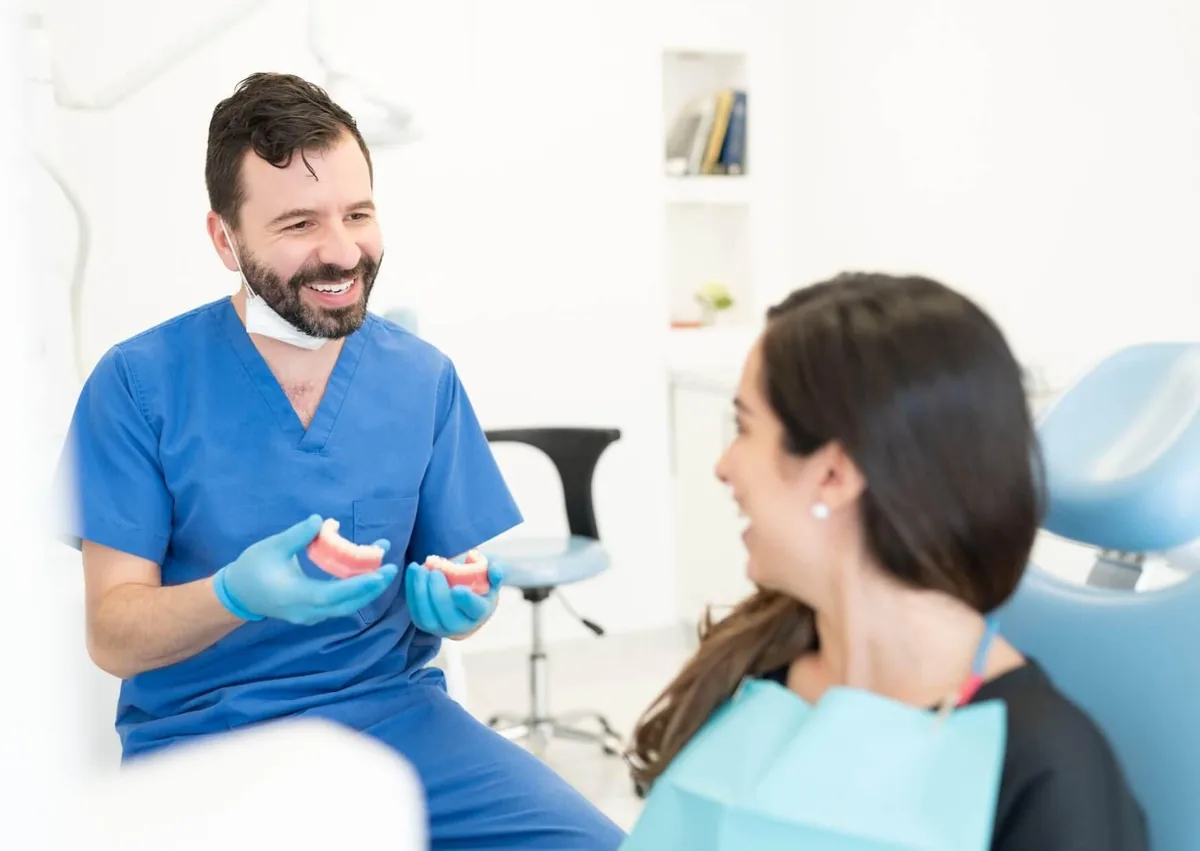
Many adults with one, several, or all teeth missing can be considered for implants if they have enough bone or can undergo augmentation. Age alone is usually less important than growth status, general health, oral hygiene, medication history, and the ability to complete maintenance visits.
Implant treatment may need to be delayed or modified when gum disease is active, diabetes is poorly controlled, smoking is ongoing, jaw growth is incomplete, or certain medical conditions and therapies affect healing. Patients should disclose all medications and supplements, especially antiresorptive drugs used for osteoporosis or cancer, as well as prior head or neck radiation.
The next step is a comprehensive examination with appropriate imaging and a written comparison of reasonable alternatives. A sound plan should explain anticipated stages, provisional teeth, grafting needs, risks, fees, maintenance, and what happens if an implant does not integrate.
To explore personalized implant options and next steps, request a consultation to review treatment, timeline, and costs. Scottsdale Center for Implant Dentistry offers dental implants in Scottsdale, AZ and nearby North Scottsdale and Carefree; call (480) 306-8510 or book online to get started.
No single option is best for everyone. Implants often offer stronger stability and preserve more bone, while bridges or dentures may be preferable when surgery, treatment time, anatomy, health factors, or cost make implants less suitable.
Temporary teeth can sometimes be attached on the day implants are placed. Final restorations usually come later, after healing and confirmation that the implants are stable.
Implants can function for many years, but lifetime success cannot be guaranteed. Health changes, plaque, smoking, grinding, bone loss, and mechanical wear can affect the implant or restoration.
Bone grafting, sinus augmentation, shorter implants, angled placement, or a different prosthetic design may be considered. In some cases, a conventional bridge or removable denture may be safer or more predictable.
Local anesthesia should prevent sharp pain during the procedure, although pressure and vibration may be noticeable. Postoperative soreness and swelling are common and usually improve, but severe or worsening symptoms require prompt professional evaluation. For more on this topic, read Are dental implants painful.