Responsibility for dental implant failure depends on why the implant failed, not simply on the fact that it failed. A dentist, specialist, laboratory, or manufacturer may be responsible when poor planning, substandard treatment, or a defective component caused the problem, while a patient may contribute through smoking, poor home care, missed follow-ups, or ignoring restrictions.
In many cases, implant failure is a recognized complication and no single person is at fault. Determining responsibility usually requires an exam, imaging, treatment records, and a clear timeline of symptoms. A qualified dentist can help identify the clinical cause, but only an attorney can advise whether the facts support a legal claim.
If you're concerned that a failing or painful implant may need repair or replacement, Scottsdale Center for Implant Dentistry in Scottsdale, AZ can review scans and records to clarify causes and help you understand practical next steps.
Dental implants succeed when several factors work together. The implant must be placed in the right position, integrate with bone, support a well-designed restoration, and remain surrounded by healthy tissue.
Common responsibility patterns include:
More than one factor may contribute. An implant can be placed accurately and still fail if healing is compromised, while a poorly designed restoration can worsen inflammation around an otherwise stable implant.
A failed implant does not automatically mean malpractice occurred. Negligence generally requires a breach of the professional standard of care that directly caused harm.
Known risks of implant treatment may include infection, nerve injury, sinus complications, poor bone integration, gum recession, bone loss, implant fracture, and restoration failure. Informed consent should explain material risks and alternatives, but a signed consent form does not excuse negligent care or prove negligence.
An independent clinician may review preoperative scans, health history, periodontal findings, implant position, restoration fit, follow-up care, and whether warning signs were addressed. Legal standards and filing deadlines vary by state, so legal questions should be directed to a licensed attorney.
Successful treatment starts with a thorough evaluation of bone volume, gum health, bite forces, medications, medical conditions, and habits such as smoking or grinding. Careful implant treatment planning helps identify risks before surgery begins.
3-D cone beam imaging, often called CBCT, shows bone anatomy, nearby nerves, and sinus spaces more clearly than standard two-dimensional X-rays. That added detail can improve case selection, implant positioning, and complication prevention.
Computer-guided and robotic-assisted systems built from digital treatment planning can help transfer a digital plan to the mouth with greater positional precision. These tools may improve control of implant angle and depth, but they do not eliminate surgical or biological risk. Learn more about robotic dental implant surgery.
Planning should also be restoration-driven. That means the implant is positioned to support a functional, cleanable final tooth, not just placed where bone happens to be available.
The right solution depends on how many teeth are missing, how much bone remains, the health of the gums, and how forces are distributed during chewing. Each treatment option has different biological and mechanical risks.
|
Treatment Option |
Typical Use |
Potential Failure Points |
|---|---|---|
|
Single implant |
Replaces one missing tooth |
Failure to integrate, crown loosening, gum or bone loss |
|
Implant-supported bridge |
Replaces several adjacent teeth |
Uneven force, component loosening, cleaning difficulty |
|
All-on-4 |
Supports a full arch on four implants |
Loss of a key implant, prosthesis fracture, hygiene-related inflammation |
|
Full-arch restoration |
Replaces all teeth in one arch using several implants |
Implant overload, component wear, speech or cleaning problems |
All-on-4 is a specific full-arch concept that commonly uses four strategically angled implants. It can reduce the need for grafting in selected cases, but it is not right for every patient and does not guarantee immediate or permanent success.
With full-arch treatment, the condition of every supporting implant and the design of the prosthesis matter. Losing one implant does not always mean the entire restoration must be replaced, but revision is often more complex than repairing a single implant crown.
During planning, the dental team may complete a clinical exam, periodontal measurements, bite analysis, photographs, digital scans, and CBCT imaging. Active gum disease, uncontrolled decay, or significant medical risks often need to be managed before implant placement.
During surgery, the clinician places the implant in the jawbone and may also perform bone or soft-tissue grafting. A temporary tooth may be placed immediately when stability and bite conditions allow, but immediate loading is not appropriate in every case.
After healing, an abutment connects the implant to the crown, bridge, or full-arch prosthesis. The final restoration is checked for fit, bite balance, appearance, speech, and access for cleaning.
If failure occurs, records from each stage can matter. Useful documents may include consent forms, health histories, images, implant labels, laboratory prescriptions, progress notes, and maintenance records.
Initial swelling, bruising, tenderness, and minor bleeding often improve within several days. Bone integration usually takes several months, although timing varies based on implant stability, grafting, treatment location, and overall health.
Early failure happens before stable bone integration. It may involve persistent pain, infection, or implant mobility.
Late failure happens after the implant has integrated. Common causes include peri-implantitis, excessive bite force, component damage, or progressive bone loss.
Contact a dentist promptly for worsening pain, swelling that increases after initial improvement, pus, bad taste, exposed implant surfaces, loosening, or a restoration that suddenly feels different. Seek urgent care for trouble breathing or swallowing, rapidly spreading facial or neck swelling, uncontrolled bleeding, or severe systemic illness.
Do not try to tighten, remove, or reposition implant parts at home. A loose crown or screw may be repairable, but continued chewing can damage the restoration or surrounding tissue.
For practical postoperative guidance, including diet, see what to eat after surgery.
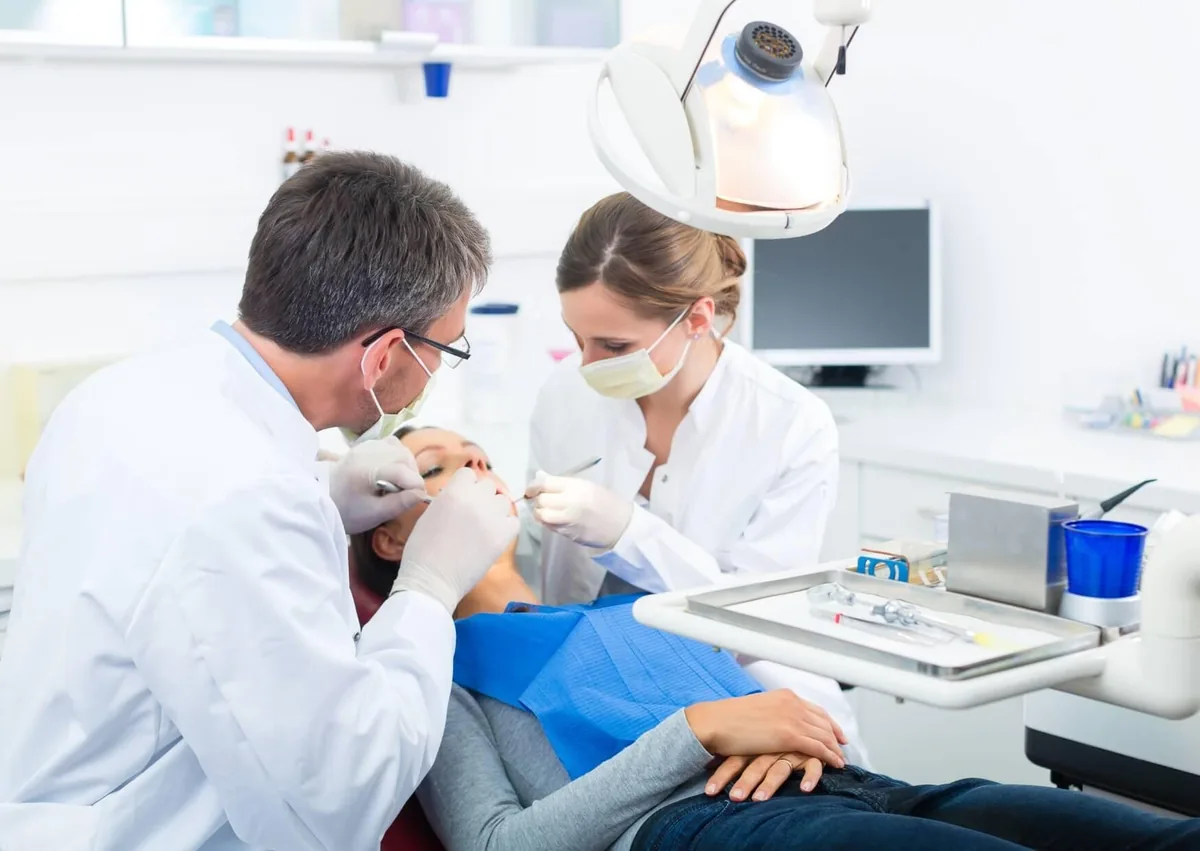
The first step is identifying whether the problem involves the implant itself, the surrounding bone or gum, or the attached restoration. A dentist may use an exam, probing, bite assessment, and imaging to check for mobility, infection, component fracture, or bone loss.
Patients who want clarification can request complete copies of their records and a written explanation of the diagnosis and proposed correction. Keeping a dated symptom log, receipts, photographs, and communications can also help document the sequence of events.
A second opinion from a periodontist, oral and maxillofacial surgeon, prosthodontist, or another implant-trained dentist can be helpful, especially before major corrective treatment. The reviewer should assess the case independently rather than being asked to assign legal blame.
If negligence or a defective product is suspected, a dental malpractice or product-liability attorney can explain local requirements. Necessary infection control or urgent treatment should not be delayed while responsibility is being investigated.
Implants do not get cavities, but the tissue around them can become inflamed or lose bone. Learn how gum disease affects implants and why ongoing periodontal disease treatment may be important for long-term stability.
Daily plaque removal, professional maintenance, and periodic imaging when indicated are central to implant health. Smoking, poorly controlled diabetes, untreated grinding, and inconsistent maintenance can increase complication risk.
A night guard may be recommended when clenching or grinding places excessive force on the restoration. Full-arch restorations may also require professional removal or specialized maintenance depending on their design.
Good candidates generally need enough bone or a workable grafting plan, manageable health risks, healthy or treatable gums, and the ability to maintain the restoration. Age alone is usually less important than healing capacity, overall health, and long-term hygiene. For more on candidacy, see when is it too late to get implants.
Anyone with a failing or questionable implant should schedule an evaluation rather than waiting for severe pain. Bring a current medication list and, when available, previous images, surgical notes, implant details, and information about when symptoms began.
If replacement is needed, dental implants can often still be considered as a durable option.
For a thorough assessment and to discuss repair or replacement options, arrange an implant-focused consultation so causes can be evaluated and a practical plan proposed. Contact Scottsdale Center for Implant Dentistry for dental implants in Scottsdale, AZ and nearby North Scottsdale or Carefree; call (480) 306-8510 to schedule.
No. A dentist can explain expected outcomes and use evidence-based steps to reduce risk, but biological healing and long-term tissue response cannot be guaranteed. A written warranty may cover certain components or repairs, but that is not the same as a clinical guarantee.
No. A loose crown, screw, or prosthetic component may sometimes be repaired without removing an integrated implant. A mobile implant, severe bone loss, uncontrolled infection, or fracture may require removal after examination and imaging.
Payment depends on the cause, treatment agreement, warranty terms, insurance coverage, and whether professional or product liability is established. Patients should ask for a written cost breakdown and whether any portion is covered by the treating office or component manufacturer.
Often, but not always. Replacement may require infection control, healing time, bone grafting, a revised implant position, or a different restorative plan.
Seek prompt evaluation for persistent pain, mobility, infection, numbness, or progressive swelling. If the situation is stable, obtain records and arrange an independent review before irreversible corrective treatment when practical.