The short answer is that dairy is not universally off-limits after dental implant surgery. Some dentists recommend avoiding milk, yogurt, cheese, and similar foods for the first 24 to 48 hours because of nausea, food texture, or medication instructions, but dairy itself does not usually disrupt implant healing. Follow your surgeon’s instructions, especially if your procedure involves sedation, extraction, or bone grafting.
Dental implants can replace one missing tooth, stabilize a denture, or support a full-arch restoration. Protecting the surgical site during early healing matters, but long-term success also depends on precise planning, careful placement, and consistent maintenance.
If you are weighing implant options or worried about diet and healing after surgery, learning more about dental implants can clarify timing and post-op care. Scottsdale Center for Implant Dentistry in Scottsdale, AZ, provides clear recovery guidance and personalized treatment planning to help protect your results.
Dairy does not generally cause infection or prevent osseointegration, which is the process of bone bonding to the implant. When a dentist advises avoiding dairy, the reason is usually related to the procedure or recovery plan, not because dairy is inherently harmful.
After IV sedation or general anesthesia, rich foods may worsen nausea or vomiting. Vomiting can irritate the surgical site, increase bleeding, and stress fresh sutures, so many clinicians prefer clear liquids and bland foods first.
Some dairy foods are also inconvenient during early healing. Sticky cheese may require more chewing, and yogurt with seeds, granola, or fruit pieces can leave debris near an incision or grafted area.
Medication instructions can matter too. Calcium supplements may affect the absorption of certain medicines, although that does not apply to every drug used in dentistry. Ask your dentist or pharmacist whether dairy should be separated from any prescribed medication.
If your surgeon told you to avoid dairy, the restriction is often short. In many cases, it lasts only the rest of the day or the first 24 to 48 hours.
The exact timing depends on nausea, bleeding, incision location, grafting, and the complexity of the surgery. A single straightforward implant may allow a faster return to normal foods than a case involving extractions or full-arch treatment.
When dairy is allowed, smoother choices such as plain yogurt or cottage cheese are usually easier to tolerate. Choose cool or room-temperature foods, avoid crunchy mix-ins, and keep food away from the surgical site.
Do not drink milkshakes through a straw. Suction can disturb the healing site or blood clot, especially if an extraction was done at the same appointment.
For the first day, focus on soft, bland, easy-to-swallow foods. Good options may include water, broth that is not hot, applesauce, mashed banana, smooth soup, oatmeal, mashed potatoes, soft eggs, or a nondairy protein drink.
Avoid very hot, hard, crunchy, spicy, acidic, or sticky foods. Alcohol and tobacco can also interfere with healing and should be avoided according to your dental team’s instructions.
|
Recovery Stage |
Foods Often Tolerated |
Foods or Habits to Avoid |
|---|---|---|
|
First 24 hours |
Cool liquids, applesauce, smooth soup, mashed foods |
Hot foods, straws, alcohol, crunchy foods |
|
Days 2 to 7 |
Soft eggs, pasta, fish, oatmeal, permitted smooth dairy |
Chewing on the implant, seeds, chips, sticky foods |
|
Later recovery |
Gradual return to a balanced diet as directed |
Biting hard foods until cleared |
Adequate protein, fluids, and calories support tissue repair. If you have diabetes, kidney disease, swallowing difficulty, food allergies, or a prescribed medical diet, ask your dentist and physician how to adapt these recommendations.
A single implant replaces one missing tooth root and later supports a crown. It may be placed immediately after extraction or after the site heals, depending on bone quality, infection risk, and soft-tissue conditions.
Implant-supported bridges can replace several adjacent missing teeth. Full-arch options such as All-on-4 support a complete arch of teeth on a limited number of implants, although some patients need more than four.
Extensive treatment often means a longer soft-food phase. Temporary teeth can look functional right away, but they do not mean the implants are fully integrated with bone.
|
Treatment |
Typical Use |
Early Eating Consideration |
|---|---|---|
|
Single implant |
One missing tooth |
Avoid chewing at the surgical site |
|
Implant-supported bridge |
Several adjacent missing teeth |
Protect multiple healing implant sites |
|
All-on-4 or full-arch restoration |
Most or all teeth in one arch |
A soft diet may be required for several weeks |
|
Implant-retained denture |
Improved denture stability |
Follow instructions for wearing and cleaning the denture |
Modern implant planning often combines a cone-beam CT scan with digital scans of the teeth and gums. This helps the clinician evaluate bone volume and plan implant position in relation to the final restoration, nearby roots, nerves, and sinus spaces.
A custom surgical guide can transfer that plan to the mouth with greater control over drilling position and angulation. Yomi robotic implants add real-time guidance and allow the surgeon to adjust during treatment while staying within defined safety boundaries.
These tools may improve positional accuracy and treatment efficiency. For a closer look at this approach, see robotic dental implant surgery. Even with advanced technology, diagnosis, surgical judgment, and case selection remain essential.
Planning may include a medical and dental history, gum evaluation, bite analysis, imaging, and digital impressions. For more detail on this phase, see implant treatment planning.
The team also reviews smoking or vaping, diabetes control, medications, active infection, available bone, and whether grafting is needed. In some cases, clinicians also use PRF to support soft-tissue healing.
During surgery, the site is numbed and the implant is placed into the prepared bone. Some patients receive sedation or a temporary tooth, but that temporary restoration is designed to limit pressure on the healing implant.
Bone integration usually takes several months, although timing varies by location, bone quality, grafting, health history, and loading protocol. Once the implant is stable, an abutment connects it to the final crown, bridge, or full-arch prosthesis.
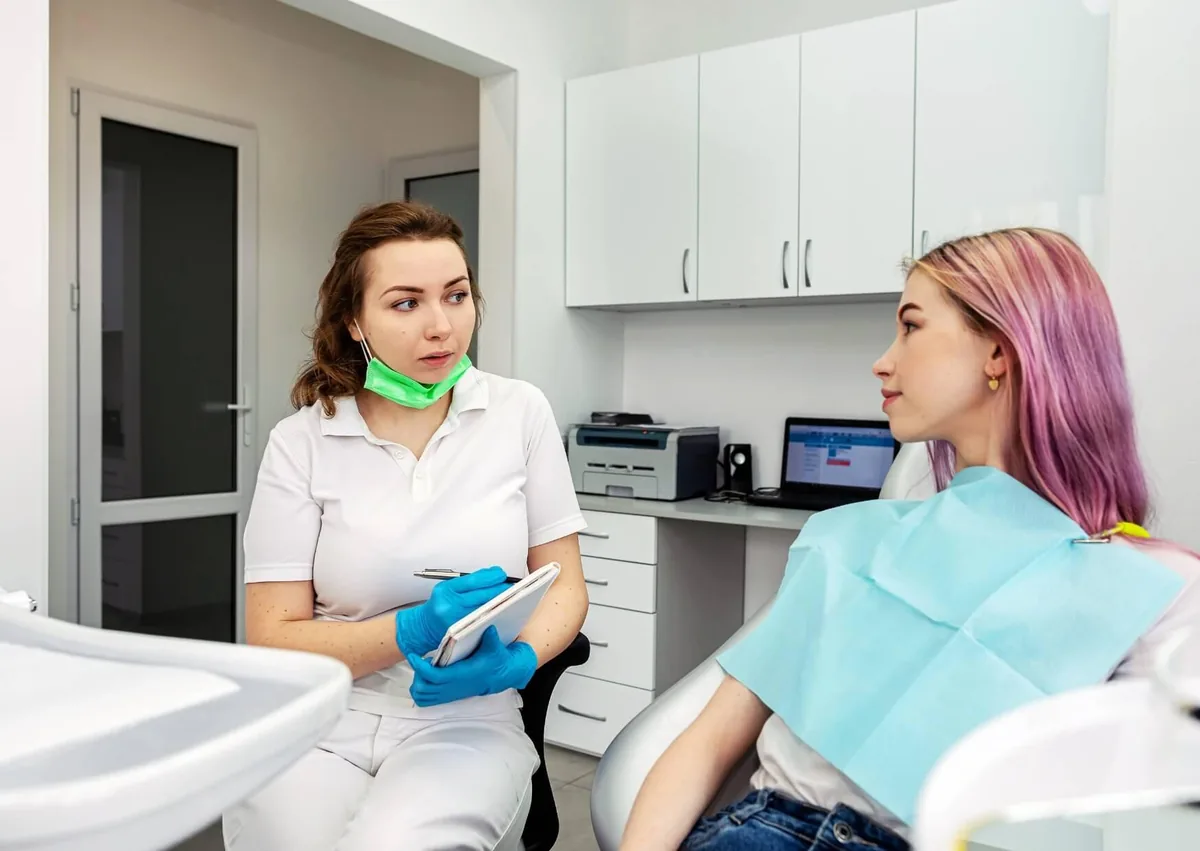
Mild swelling, tenderness, bruising, and light oozing are common in the first few days. Many patients also want to know if dental implants are painful. Swelling often peaks around day two or three and then gradually improves.
Many people return to normal nonstrenuous activity within a few days. Exercise, oral hygiene, denture use, and diet should be resumed only as directed, especially after grafting or full-arch surgery.
Call the dental office if pain or swelling worsens after first improving, bleeding continues, fever develops, pus appears, or the implant or temporary tooth feels loose. Seek urgent medical care for trouble breathing or swallowing, rapidly spreading swelling, uncontrolled bleeding, or signs of a severe allergic reaction.
Implants do not get cavities, but plaque can still inflame the surrounding gum and bone. Peri-implantitis is a progressive inflammatory condition that can lead to bone loss and implant failure. Learn more about how dental implants fail.
Daily brushing, cleaning around the restoration, professional maintenance, and periodic imaging help protect the result. Your dental team may recommend floss, interdental brushes, or a water flosser based on the design of the prosthesis.
Avoiding tobacco, controlling diabetes, managing teeth grinding, and keeping follow-up visits all improve long-term predictability. A night guard may be recommended if clenching or grinding places excess force on the restoration.
Many adults with missing teeth can be candidates for implants if they have enough bone or are eligible for grafting, can maintain oral hygiene, and have health conditions that are reasonably controlled. Age alone is usually less important than healing capacity, jaw development, and overall health.
Active gum disease, uncontrolled diabetes, heavy tobacco use, certain medications, or prior radiation to the jaws may increase risk. These factors do not always rule out treatment, but they do require careful planning.
A comprehensive evaluation can show which implant solution fits your missing teeth, bite, available bone, and goals. It is also the best time to get written instructions about dairy, medications, oral hygiene, temporary teeth, and how long to stay on a soft diet.
To review your implant timeline, post-op diet, and whether grafting or PRF are needed, request a consultation with the implant team. Scottsdale Center for Implant Dentistry offers dental implants in Scottsdale and nearby North Scottsdale and Carefree; call (480) 306-8510 or book online to set an appointment.
No. Dairy is not generally known to cause implant infections. Infection risk is more closely related to wound care, bacterial contamination, smoking, health conditions, and surgical factors.
Often yes, if your dentist has not restricted dairy and nausea has passed. Choose smooth yogurt without seeds, granola, or fruit chunks, and avoid chewing near the surgical site.
Possibly, if dairy is allowed, but do not use a straw. Also avoid relying on sugary drinks instead of balanced soft foods and proper oral hygiene.
Implant procedures vary widely. Sedation, extractions, grafting, sinus procedures, and full-arch treatment can all change the safest recovery plan.
That may take a few days after a simple implant or several weeks after more extensive treatment. Return to firmer foods only when your treating dentist confirms the implant and any temporary restoration can tolerate them.