The typical single tooth implant cost in the United States is about $3,000 to $6,000 for the implant, abutment, and crown. The total cost can be lower or higher depending on the tooth location, imaging, materials, sedation, insurance benefits, and whether treatment also includes extraction or bone grafting.
If you are deciding whether a single missing tooth should be replaced with dental implants, understanding the cost, treatment stages, and likely outcomes can make the choice clearer. Scottsdale Center for Implant Dentistry in Scottsdale, AZ uses a prosthodontic and implant-focused approach to explain your options, protect nearby teeth, and plan a replacement that fits your bite and long-term goals.
A single dental implant replaces a missing tooth from root to crown. It usually includes a titanium implant fixture placed in the jawbone, an abutment that connects the parts, and a custom crown that becomes the visible tooth.
For many patients, an implant restores chewing function and appearance without relying on the neighboring teeth for support. Unlike a traditional bridge, it usually does not require reshaping healthy adjacent teeth; for a direct comparison, see fixed bridge vs. dental implant.
An implant may also help preserve bone in the area by transmitting chewing forces into the jaw. That does not stop all natural remodeling, but it can help limit the bone loss that often follows tooth loss.
Single implants are commonly used when one tooth is missing or cannot be predictably restored. Other options may include a tooth-supported bridge, a removable partial denture, or in selected cases, orthodontic space closure; for more on alternatives, see options replace single tooth.
Implant treatment is a sequence of services, not one flat product. That is why a written estimate should separate each part of care instead of listing only the implant fixture price.
Common cost components include:
A straightforward case with enough bone usually costs less than a case that needs staged grafting or added surgical care. Front-tooth cases may also require more detailed planning because small differences in gum contour, crown position, and symmetry are easier to see.
Materials and laboratory choices also affect price. Titanium is the most widely used implant material, while zirconia may be considered in selected situations, and the final crown may be made from zirconia, ceramic, porcelain fused to metal, or another material based on appearance and bite demands.
Dental insurance may cover part of the crown, extraction, imaging, or implant surgery, but benefits vary widely. Plans may include annual maximums, waiting periods, missing-tooth exclusions, network limits, or frequency restrictions.
Medical insurance sometimes contributes when tooth loss or reconstruction is tied to a covered injury or medical condition. Routine implant replacement, however, is commonly excluded.
Flexible spending accounts and health savings accounts may help with eligible out-of-pocket costs. Before treatment begins, it is worth confirming benefits in writing.
When comparing estimates, ask whether the fee includes the implant fixture, abutment, crown, imaging, and follow-up care. A low advertised price may refer only to surgical placement and leave out the restorative parts needed for a functioning tooth; for a broader overview, see cost of dental implants.
Modern implant treatment often starts with a CBCT scan, which creates a three-dimensional view of the jaw, nearby roots, sinus spaces, and major nerve pathways. Digital scans of the teeth can then be combined with that imaging to plan the implant’s angle, depth, and position in relation to the future crown.
Guided surgery uses that virtual plan to create custom surgical guides that direct the drilling instruments during placement. In some settings, robotic-assisted systems provide real-time tracking and guidance while the clinician remains fully responsible for the procedure.
These technologies can improve positional accuracy and help protect important anatomy, especially in limited or complex spaces. They do not remove surgical risk, and outcomes still depend on diagnosis, clinician judgment, bone and gum health, restoration design, and patient maintenance.
A single implant is designed to replace one tooth without joining it to adjacent teeth. If several teeth are missing, multiple implants may be used, but replacing every missing tooth with an individual implant is not always necessary.
The All-on-4 treatment concept uses four strategically placed implants to support a fixed full-arch restoration in selected patients. Some full-arch cases need more than four implants because bone anatomy, bite forces, and restoration design vary from person to person.
Full-arch treatment has a very different scope and cost than a single implant. It may involve extractions, grafting, temporary teeth, and a final fixed bridge, while an implant overdenture is another option that improves stability but remains removable for cleaning.
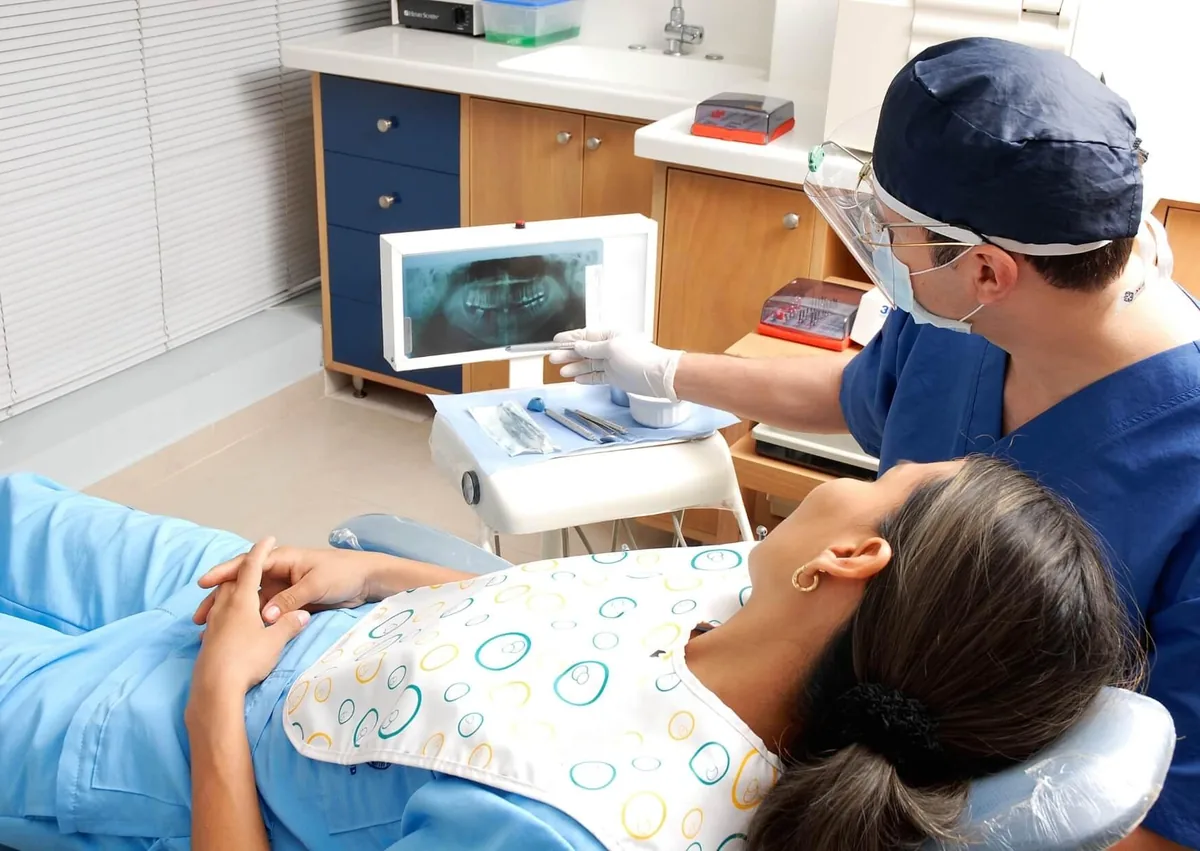
Planning begins with a review of medical and dental history, an exam of the gums and bite, and appropriate imaging. The dentist evaluates bone volume, infection, smile appearance, neighboring teeth, and any factors that could affect healing or long-term success.
During surgery, the area is numbed and the implant is placed into the prepared bone. Local anesthesia is often enough, although sedation may be used based on the procedure, health history, and patient preference.
The implant then heals while osseointegration occurs, meaning living bone forms a stable connection with the implant surface. A temporary tooth may be possible in selected cases, but it must be designed to limit pressure on the healing implant.
After integration, the abutment and final crown are placed and the bite is adjusted. In some cases, an implant and temporary restoration can be placed on the same day as an extraction, but immediate placement or loading is not appropriate for every site.
Mild swelling, soreness, bruising, and minor bleeding are common during the first few days after surgery. Many patients return to routine activities within one or two days, although recovery depends on the extent of surgery, grafting, health status, and work demands.
Initial gum healing often takes one to two weeks. Osseointegration commonly takes about three to six months, and grafting or staged treatment can extend the timeline.
Even when a temporary tooth is placed right away, biological healing is still ongoing underneath. That is why follow-up care and bite protection matter during the healing phase.
Follow the treating clinician’s instructions for eating, cleaning the area, activity, and medications. Avoid smoking and nicotine during healing because they are associated with impaired healing and a higher risk of complications; for practical preparation tips, see prepare for dental implants.
Seek prompt dental care for worsening swelling after several days, persistent or heavy bleeding, fever, pus, a bad taste with increasing pain, new numbness, or an implant or temporary tooth that feels loose. Trouble breathing or swallowing, rapidly spreading facial swelling, or swelling near the eye requires urgent medical evaluation.
Dental implants have high long-term survival rates in appropriately selected and maintained patients, but no implant is guaranteed to last for life. Problems can occur from failed integration, infection, excessive bite forces, component wear, fracture, or inflammation and bone loss around the implant, called peri-implantitis.
Daily brushing and cleaning around the implant with floss or another recommended interdental aid are essential. Professional exams and cleanings help the dental team monitor gum health, bone levels, bite forces, and the condition of the crown and its components.
Smoking, uncontrolled diabetes, untreated gum disease, poor plaque control, and teeth grinding can increase risk. A night guard may be recommended when clenching or grinding could overload the implant, based on an individual bite assessment.
Good candidates generally need enough healthy bone to support an implant, manageable medical conditions, healthy or treatable gums, and the ability to maintain daily oral hygiene. If the ridge has narrowed after tooth loss, bone grafting may make treatment possible, although it adds cost and healing time.
Age alone does not determine candidacy in adults. Medications, immune or bleeding conditions, prior head or neck radiation, active cancer therapy, osteoporosis treatment, nicotine use, and diabetes control can all affect timing and risk.
Persistent tooth pain, swelling, mobility, or a nonhealing extraction site should be evaluated rather than assumed to require an implant. A dentist can determine whether the tooth is restorable, compare replacement options, and provide an itemized plan with expected fees, timing, alternatives, and likely insurance benefits.
To get a personalized, itemized estimate and see whether a single implant or an alternative is right for you, schedule a consultation for imaging and a treatment plan. Scottsdale Center for Implant Dentistry provides dental implants consultations in Scottsdale, AZ and serves nearby Phoenix, AZ and Tempe, AZ; call (480) 306-8510 to schedule an appointment.
A complete single implant commonly costs about $3,000 to $6,000 without insurance, although local fees and case complexity can move the total outside that range. Confirm whether the estimate includes the implant fixture, abutment, crown, imaging, surgery, and follow-up visits.
Some advertised fees cover only the implant fixture or surgical placement. Imaging, extraction, grafting, sedation, the abutment, and the crown may be billed separately, so ask for a written, itemized estimate.
An implant often has a higher initial cost than a traditional bridge, especially if grafting is needed. A fair comparison should also consider the condition of adjacent teeth, expected maintenance, projected longevity, and whether a bridge would require removing healthy tooth structure.
A straightforward case often takes three to six months, but treatment may be shorter or longer depending on extraction timing, bone quality, grafting, healing, and restoration needs. Some patients can receive a temporary tooth immediately while the implant continues to integrate.
Original Medicare generally does not cover routine dental implants or most routine dental care. Some Medicare Advantage plans may offer dental benefits, but limits and exclusions vary, so the plan should be contacted directly for written details.